VWAP Pullback Strategy — Session Math, the Extension Gate, and Three Worked Cases
The institutional average, specified for retail execution: the cumulative formula, dispersion bands, the extension gate that fixes the trivial-touch problem, and three worked cases with every number computed.
VWAP is the only indicator in this series that was born institutional. It entered finance as an execution benchmark — the price an institutional order "should" have achieved — and it remains the yardstick against which brokers are measured. Traders inherited it as a chart line, and most guides stop there: "above VWAP is bullish, below is bearish." This guide goes the full distance: the cumulative formula computed bar by bar, volume-weighted dispersion bands, the extension gate that a naive implementation gets wrong, a trend-day filter, and three worked cases with every number produced by code that asserts its own claims.
1. What VWAP Actually Is — and the Aggregated-Bar Caveat
VWAP is the volume-weighted average price over a defined window, typically one trading session. Using typical price \(TP = (H + L + C)/3\) per bar and volume \(V\):
$$\text{VWAP}(i) = \frac{\sum_{j=s_0}^{i} TP_j \cdot V_j}{\sum_{j=s_0}^{i} V_j}$$
where \(s_0\) is the session start. The line resets each session, which is the whole point: VWAP answers "where has volume transacted today," and the answer decays to uselessness if you let old sessions accumulate. In the worked example (24-bar sessions), VWAP at the trigger bar computes to 1.09076 — every trade-weighted typical price since the session open, averaged.
The dispersion band, which most retail guides omit, is the volume-weighted standard deviation of typical price around VWAP:
$$\sigma(i) = \sqrt{\frac{\sum_{j=s_0}^{i} V_j \cdot (TP_j - \text{VWAP}(i))^2}{\sum_{j=s_0}^{i} V_j}}$$
In the worked session, \(\sigma\) = 12.3 pips at the trigger. The band tells you how dispersed the session's transacted prices are: a tight band means volume concentrated near the average (a balanced auction), a wide band means volume spread across the range (a directional auction). The pullback's job is to return price to the average; the band tells you how far "the average" effectively reaches.
2. The Extension Gate — the Bug Every Naive Implementation Ships With
Here is an engineering confession that doubles as the most important rule in this guide. The first version of the detector in Section 11 armed a VWAP pullback on the session's opening bars — every session, every day. Why? Because VWAP starts at the first bar's own typical price. On bar one, the line and the bar are the same thing by construction, so "price touched VWAP" is trivially true, and the setup scan immediately starts hunting for a trigger at the open. The strategy was buying the open of every session and calling it a VWAP pullback.
The fix is an extension gate: the session must first move at least \(0.5 \times \text{ATR}_{14}\) away from VWAP (a bar high at or above VWAP + 0.5×ATR) before a pullback can arm. A pullback is only a pullback if there was a rally to pull back from. In the worked session, the gate opens at bar d1 when the high (1.08980) clears VWAP + 0.5×ATR. Only then does the touch logic activate.
And the touch itself needs one more clause, for the same family of reasons: a touch is a progressing probe — a bar whose low is at or below VWAP and below the previous bar's low. Without the lower-low condition, bars that ride along the VWAP during a shallow drift count as touches, and the "pullback" never actually pulled back. With it, the touch sequence in the worked data reads exactly like a retracement should: lows of 1.09080, then 1.09040, then 1.09000 — each one deeper, each one testing the line.
3. The Trend-Day Filter
The second condition is context. A VWAP pullback is a trend-continuation setup, and on a range day the VWAP line is a fair-value magnet, not a trend support — price oscillates through it all session and the "setup" has no trend to continue. The filter is one inequality:
$$\text{session range so far} \ \ge\ 2.0 \times \text{ATR}_{14}\ (\text{at the current bar})$$
In the worked session, the range at the trigger is 58.0 pips against a threshold of 28.1 pips (2.0 × 14.07) — a trend day by a wide margin. The third worked case shows the filter in action on a 22.0-pip range day that fails the 25.4-pip threshold, and — because honesty requires showing what filters cost — the counterfactual trade that the filter skipped (+1.41R). The filter is a measured trade-off, tested in Section 9, not a free lunch.
4. The Exact Rules
VWAP Pullback — Complete Rule Set (long side, per session)
- VWAP: cumulative volume-weighted typical price from session start; bands from the volume-weighted standard deviation.
- Extension gate: a bar high ≥ VWAP + 0.5 × ATR14 opens the session for setups.
- Touch: after the gate, a bar whose low is at or below VWAP and below the previous bar's low.
- Trend-day filter: session range so far ≥ 2.0 × ATR14 at the trigger.
- Trigger: a bullish engulfing bar with close at or above VWAP (after at least one touch).
- Entry: at the trigger bar's close.
- Stop: lowest low from the first touch through the trigger, minus max(2 pips, 0.15 × ATR14).
- Invalidation: a close more than 1.0 × ATR14 below VWAP before the trigger cancels the session (a normal pullback closes at or below VWAP by construction; only a full-ATR-deep close marks a broken regime).
- Targets: ref high = session high through the bar before the trigger. TP1 = ref high; TP2 = ref high + 0.5 × (ref high − VWAP at entry); TP3 = ref high + 1.0 × (same). Partials 50/30/20. One setup per session.
5. Worked Case 1 — Valid: Every Number Computed
Synthetic labeled data, EURUSD-like H1, 24-bar sessions, 1 pip = 0.0001. Every value is computed by the module in Section 11, which asserts each claim.
| Bar | Open | High | Low | Close | Volume | Role |
|---|---|---|---|---|---|---|
| d1 | 1.08840 | 1.08980 | 1.08820 | 1.08960 | 650 | Extension gate opens |
| d4 | 1.09200 | 1.09300 | 1.09140 | 1.09260 | 750 | Session high 1.09300 |
| d6 | 1.09190 | 1.09210 | 1.09080 | 1.09120 | 600 | Touch 1 (low at VWAP) |
| d7 | 1.09120 | 1.09140 | 1.09040 | 1.09070 | 550 | Touch 2 (lower low) |
| d8 | 1.09070 | 1.09090 | 1.09000 | 1.09030 | 520 | Touch 3 (low 1.09000) |
| d9 | 1.09025 | 1.09110 | 1.09000 | 1.09090 | 700 | Trigger: engulfing close 1.09090 |
The trigger check in full: prior bar d8 is red (close 1.09030 < open 1.09070). Bar d9 is green (close 1.09090 > open 1.09025). Engulfing requires open of d9 ≤ close of d8: \(1.09025 \le 1.09030\) ✓. And close of d9 ≥ open of d8: \(1.09090 \ge 1.09070\) ✓. The close (1.09090) is at or above VWAP (1.09076) ✓, and touches occurred at d6–d8 ✓. All conditions hold.
The trade arithmetic:
VWAP at d9 = 1.09076 ; sigma band = 12.3 pips
Session range = 58.0 pips >= 2.0 x 14.07 = 28.1 -> trend day

Buffer = max(2, 0.15 x 14.07) = 2.11 pips
Stop = lowest low since first touch (1.09000) - 0.000211 = 1.08979
Entry = 1.09090 (trigger close)
Risk = 1.09090 - 1.08979 = 0.001111 = 11.11 pips

Ref high (session max through d8) = 1.09300
TP1 = 1.09300 : 21.0 pips = 1.89R  (hit at d12)
TP2 = 1.09412 : 32.2 pips = 2.90R  (hit at d13)
TP3 = 1.09524 : 43.4 pips = 3.91R  (hit at d15)

Blended 50/30/20 = 2.60R before costs, 2.51R after 1-pip spread

Sizing ($10,000, 1% risk, EURUSD):
  cost-adjusted risk per lot = (11.11 + 1.0) x $10 = $121.10
  lots = floor(100 / 121.10 / 0.01) x 0.01 = 0.82
  money at risk = 0.82 x $121.10 = $99.31
  P&L at blended: 2.51 x $99.31 = +$248.87
Three features of the numbers deserve attention. The stop is tight — 11.11 pips — because the entry fires just above VWAP and the sweep low sits 9 pips below it. That tightness is the honest geometry of VWAP trading: entries near the line mean small absolute risk, which means large R-multiples when the continuation works. It also means the spread costs 9% of the risk budget (1 pip of 11.11) — the highest cost ratio in this series so far, and the reason VWAP setups demand H1 or higher where the stop has room. And the σ band (12.3 pips) frames the whole trade: the pullback's 9-pip wick stayed inside the band, which is what a pullback to fair value looks like — price returned to the average, not through it.
6. Worked Case 2 — Failed: the Close That Broke the Regime
Same session, same trigger, same entry and stop — different continuation:
| Bar | Open | High | Low | Close | Volume | Note |
|---|---|---|---|---|---|---|
| f1 | 1.09090 | 1.09110 | 1.08990 | 1.09010 | 700 | Stall; closes back at the line |
| f2 | 1.09010 | 1.09030 | 1.08930 | 1.08950 | 750 | Low 1.08930 ≤ stop 1.08979 → filled |
The arithmetic of the loss: stop fill at 1.08979, entry 1.09090, so the realized loss is the full 11.11-pip risk plus the 1-pip spread — −1.09R, which at 0.82 lots is −$108.25. The close at 1.08950 is below VWAP minus buffer — the regime that produced the setup is gone. Note the geometry: this failure took two bars. VWAP trades resolve fast in both directions, which is a feature (quick feedback) and a hazard (the noise band around the line is where tight stops live).
The recovery math: the account stands at $9,891.75; recovering requires +1.09% — one risk unit plus costs. At 5% risk the same event costs $541 and requires +5.7% to recover.
7. Worked Case 3 — Ambiguous: the Range Day the Filter Skipped
The third case tests the trend-day filter itself. A session builds, extends 12+ pips above VWAP (opening the gate), pulls back to the line with three progressing touches, and prints a textbook engulfing trigger — and the filter rejects it, because the session's total range (22.0 pips) falls short of the 25.4-pip trend-day threshold:
Session range = 22.0 pips < 2.0 x 14.07 = 25.4 -> no trend day, NO TRADE

Counterfactual (filter disabled): entry 1.08870, stop 1.08770,
risk 10.00 pips, outcome all targets, realized +1.41R - skipped.
The skipped trade worked. This is the same class of honest cost shown in the FVG and order block guides: every filter skips some winners, and the only defensible response is measurement. The implementation runs the filter-off variant on your data and buckets outcomes by the trend_day flag (Section 9); if range-day setups genuinely matched trend-day setups after costs, the filter would be decoration and would be dropped. What the filter is for is stated in the hypothesis below — and the demo data shows why one counterfactual is not evidence either way.
8. The Trend-Day Hypothesis
H1 (our own, falsifiable): VWAP pullback entries on trend days (session range ≥ 2.0×ATR at the trigger) produce higher continuation expectancy after costs than entries on range days (filter off), consistently across walk-forward blocks. Falsification: if range-day entries match or beat trend-day entries out-of-sample, the filter is dropped and the setup runs on all days.
The implementation collects every setup with the filter disabled, records the trend_day flag at entry, and reports both buckets' expectancy, win rates and samples. On the seeded synthetic demo the buckets are populated (54 trend-day setups at −0.28R, 11 range-day setups at −0.07R) and both hover near zero-to-negative — the correct output for a random walk, and a reminder that the comparison only means something on real data with real session structure.
9. Risk Math — the Complete Arithmetic
Position sizing with costs, for the Case 1 trade:
$$\text{Lots}=\left\lfloor\frac{E \times \text{risk\%}}{(S + C)\times V}\Big/0.01\right\rfloor \times 0.01$$
with equity \(E = \$10{,}000\), risk 1%, stop \(S = 11.11\) pips, cost \(C = 1\) pip, pip value \(V = \$10\) per lot: \(100 / (12.11 \times 10) = 0.8257\), floored to 0.82 lots — risking $99.31 including the spread. The outcome table for the three cases:
| Outcome | R | P&L |
|---|---|---|
| Full stop (Case 2) | −1.09R | −$108.25 |
| TP1 only, then breakeven (50% booked) | +0.90R | +$89.38 |
| TP1 + TP2 (80% booked, runner stopped at entry) | +1.80R | +$178.76 |
| All three targets (Case 1) | +2.51R | +$248.87 |
| Range-day counterfactual (Case 3, filter off) | +1.41R | +$139.95 |
And expectancy, with the cost structure stated because VWAP's tight stops make it load-bearing:
$$E_R = p_{win}\cdot W_R - (1-p_{win})\cdot L_R$$
Illustrative inputs (hypothetical, NOT a claim):
  p = 50%   W = 1.8R   L = 1.0R
  Expectancy = 0.50 x 1.8 - 0.50 x 1.0 = +0.40R per trade

Sensitivity (the spread hits W first at tight stops):
  W drops to 1.7R after costs: 0.50 x 1.7 - 0.50 x 1.0 = +0.35R
  p = 40%: 0.40 x 1.7 - 0.60 x 1.0 = +0.08R  (thin)
  p = 35%: 0.35 x 1.7 - 0.65 x 1.0 = -0.055R  (dead)

Breakeven win rate at W = 1.7R after costs: 37.0%
The VWAP profile is the inverse of the Fibonacci profile: small absolute risk, modest reward multiples, and a higher breakeven win rate (37% at 1.7R) — the trade survives on hit rate, not on lottery runners. That is what institutional traders actually exploit about VWAP, and it is why the spread arithmetic above is not a footnote but a core input.
10. Validation Protocol
The module implements the series protocol: chronological 60/20/20 split; extension gate and buffer chosen on train only; the frozen configuration evaluated on validation and test blocks; a sensitivity grid over the extension gate ∈ {0.5, 1.0} × buffer ∈ {0.10, 0.15, 0.25} × ATR; the trend-day hypothesis test (filter off, bucketed by flag) on the full sample; costs per trade; entries at the trigger close; one setup per session; no look-ahead (all bars closed). On the seeded synthetic OHLCV demo: the grid runs from −0.30R to −0.22R across cells, the chosen configuration (gate 1.0, buffer 0.15) returns −0.36R on validation (n = 13) and −0.06R on test (n = 10), and the trend-day buckets come in at −0.28R (n = 54) versus −0.07R (n = 11). All negative or near zero — exactly what a random walk must produce, and the reason the harness can be trusted with your session data.
11. The Complete Implementation
The module below imports the shared library published with the Fibonacci guide (keep both files in the same folder). It contains the session VWAP and band calculator, the setup finder with the extension gate and touch logic, the three worked cases as literal OHLCV arrays with assertions verifying every number quoted above, and the full validation harness. Run it three ways:
python vwap_pullback.py examples    # verify the three worked cases
python vwap_pullback.py validate    # synthetic walk-forward + trend-day buckets
python vwap_pullback.py csv EURUSD_H1.csv   # your OHLCV data
#!/usr/bin/env python3
"""
vwap_pullback.py - VWAP pullback entry: reference implementation.

Companion code for the AlgoSpecial guide "VWAP Pullback Strategy"
(algospecial.com/blogs/vwap-pullback-strategy). Imports the shared library
published with the Fibonacci guide (fib_pullback.py) - keep both files in
the same folder. Pure standard library, Python 3.7+.

CONVENTIONS (stated once, used everywhere)
------------------------------------------
- VWAP is computed from typical price TP = (H + L + C) / 3 weighted by
  bar volume V: VWAP(i) = sum(TP_j * V_j) / sum(V_j), accumulated from
  the session start. Sessions are fixed-length blocks of session_len
  bars (24 by default) so the arithmetic is reproducible.
- Dispersion bands: sigma(i) = sqrt( sum(V_j * (TP_j - VWAP(i))^2) /
  sum(V_j) ). The band width is a volume-weighted standard deviation.
- IMPORTANT LIMITATION (stated, not hidden): bar-level VWAP computed
  from aggregated OHLCV is an approximation of the true tape VWAP. On
  H1 bars it is the standard approximation every retail platform uses;
  it converges to the tape VWAP only as bar size shrinks.
- Trend-day condition: session range so far (session high - session low)
  >= 2.0 * ATR14 at the current bar. Pullbacks to VWAP are only taken
  on trend days by default; the filter can be disabled for testing.
- Extension gate: the session must first move at least 0.5 * ATR14 away
  from VWAP (bar high >= VWAP + 0.5 * ATR) before a pullback can arm.
  Without this gate the session's opening bars touch VWAP trivially,
  because VWAP starts at the first bar's typical price.
- Touch: after the gate opens, a bar touches when its low is at or below
  VWAP and its low is below the previous bar's low (the probe is
  progressing, not drifting).
- Setup: after a touch, a bullish engulfing bar whose close is at or
  above VWAP triggers. Entry at that close.
- Stop: lowest low from the first touch of the current pullback through
  the trigger bar, minus buffer = max(2 pips, 0.15 * ATR14).
- Invalidation: a close below VWAP minus 1.0 * ATR14 before the trigger
  cancels the setup for that session. (A normal pullback closes at or
  below VWAP by construction; only a full-ATR-deep close marks a broken
  regime, not a pullback.)
- Targets: ref_high = highest high of the session through the bar
  before the trigger. TP1 = ref_high; TP2 = ref_high + 0.5*(ref_high -
  VWAP at entry); TP3 = ref_high + 1.0*(same). Partials 50/30/20.

WHAT THIS FILE CONTAINS
-----------------------
1. The session VWAP + band calculator, the setup finder, and simulation
   (reusing the shared simulator with identical partials and costs).
2. The three worked cases from the article as literal OHLCV arrays with
   assertions verifying every claim (extension gate, touch, trigger,
   trend-day flag, stop fill, range-day filtering).
3. A validation harness: 60/20/20 split, walk-forward, the trend-day
   hypothesis test (trend vs range buckets - the article's H1) and a
   sensitivity grid over the extension gate and the buffer.

USAGE
-----
    python vwap_pullback.py examples    # the three worked cases
    python vwap_pullback.py validate    # synthetic harness demo
    python vwap_pullback.py csv EURUSD_H1.csv
"""

from __future__ import annotations

import math
import random
import sys
from dataclasses import dataclass
from typing import List, Optional, Sequence, Tuple

from fib_pullback import (PIP, pips, atr_sma, is_bullish_engulfing,
                          simulate_long, metrics, size_position)


@dataclass
class VBar:
    o: float
    h: float
    l: float
    c: float
    v: float


def session_start(i: int, session_len: int) -> int:
    return (i // session_len) * session_len


def vwap_at(bars: Sequence[VBar], i: int, session_len: int = 24) -> Optional[float]:
    s0 = session_start(i, session_len)
    num = 0.0
    den = 0.0
    for j in range(s0, i + 1):
        tp = (bars[j].h + bars[j].l + bars[j].c) / 3.0
        num += tp * bars[j].v
        den += bars[j].v
    return num / den if den > 0 else None


def sigma_at(bars: Sequence[VBar], i: int, session_len: int = 24) -> Optional[float]:
    vw = vwap_at(bars, i, session_len)
    if vw is None:
        return None
    s0 = session_start(i, session_len)
    num = 0.0
    den = 0.0
    for j in range(s0, i + 1):
        tp = (bars[j].h + bars[j].l + bars[j].c) / 3.0
        num += bars[j].v * (tp - vw) ** 2
        den += bars[j].v
    return math.sqrt(num / den) if den > 0 else None


@dataclass
class VWSetup:
    entry_idx: int
    entry: float
    stop: float
    tp1: float
    tp2: float
    tp3: float
    vwap: float
    sigma: float
    session_range: float
    atr: float
    trend_day: bool

    @property
    def risk(self) -> float:
        return self.entry - self.stop


def find_vwap_setup(bars: Sequence[VBar], i_from: int, session_len: int = 24,
                    buffer_mult: float = 0.15, period: int = 14,
                    require_trend_day: bool = True, trend_mult: float = 2.0,
                    ext_atr: float = 0.5, inv_atr: float = 1.0) -> Optional[VWSetup]:
    """Scan one session from i_from; first valid trigger wins."""
    s0 = session_start(i_from, session_len)
    extended = False
    touched = False
    min_low: Optional[float] = None
    for i in range(i_from, len(bars)):
        if session_start(i, session_len) != s0:
            return None                      # session ended without a setup
        bar, prev = bars[i], bars[i - 1]
        vw = vwap_at(bars, i, session_len)
        a = atr_sma(bars, i, period)
        if vw is None or a is None:
            continue
        buffer = max(2 * PIP, buffer_mult * a)
        if bar.c < vw - inv_atr * a:         # regime broken (deep close below)
            return None
        if not extended and bar.h >= vw + ext_atr * a:
            extended = True
        if extended and bar.l <= vw and bar.l < prev.l:
            touched = True                   # progressing probe into VWAP
        if touched:
            min_low = bar.l if min_low is None else min(min_low, bar.l)
        if touched and is_bullish_engulfing(prev, bar) and bar.c >= vw:
            sess_high = max(x.h for x in bars[s0:i])
            sess_low = min(x.l for x in bars[s0:i])
            sess_range = max(sess_high, bar.h) - min(sess_low, bar.l)
            trend_day = sess_range >= trend_mult * a
            if require_trend_day and not trend_day:
                continue
            stop = min_low - buffer
            if stop >= bar.c:
                continue
            ref_high = sess_high
            span = ref_high - vw
            sig = sigma_at(bars, i, session_len) or 0.0
            return VWSetup(i, bar.c, stop, ref_high,
                           ref_high + 0.5 * span, ref_high + span,
                           vw, sig, sess_range, a, trend_day)
    return None


def run_vwap_strategy(bars: Sequence[VBar], session_len: int = 24,
                      buffer_mult: float = 0.15, spread_pips: float = 1.0,
                      require_trend_day: bool = True,
                      ext_atr: float = 0.5, start_idx: int = 0) -> List:
    results = []
    i = start_idx
    while i < len(bars):
        setup = find_vwap_setup(bars, i, session_len, buffer_mult,
                                require_trend_day=require_trend_day,
                                ext_atr=ext_atr)
        if setup is not None:
            res = simulate_long(bars, setup, spread_pips)
            results.append(res)
            i = res.exit_idx + 1
        else:
            i = session_start(i, session_len) + session_len
    return results


def collect_vwap_results(bars: Sequence[VBar], session_len: int = 24,
                         buffer_mult: float = 0.15, spread_pips: float = 1.0,
                         require_trend_day: bool = True,
                         ext_atr: float = 0.5) -> List[Tuple[VWSetup, object]]:
    out: List[Tuple[VWSetup, object]] = []
    i = 0
    while i < len(bars):
        setup = find_vwap_setup(bars, i, session_len, buffer_mult,
                                require_trend_day=require_trend_day,
                                ext_atr=ext_atr)
        if setup is not None:
            res = simulate_long(bars, setup, spread_pips)
            out.append((setup, res))
            i = res.exit_idx + 1
        else:
            i = session_start(i, session_len) + session_len
    return out


# --------------------------------------------------------------------------
# The three worked cases (literal arrays; assertions verify the article)
# --------------------------------------------------------------------------

DAY1 = [
    VBar(1.08000, 1.08160, 1.07960, 1.08040, 500),
    VBar(1.08040, 1.08200, 1.07980, 1.08060, 520),
    VBar(1.08060, 1.08240, 1.08020, 1.08220, 560),
    VBar(1.08220, 1.08360, 1.08180, 1.08200, 600),
    VBar(1.08200, 1.08340, 1.08140, 1.08160, 580),
    VBar(1.08160, 1.08300, 1.08080, 1.08260, 620),
    VBar(1.08260, 1.08400, 1.08220, 1.08360, 650),
    VBar(1.08360, 1.08440, 1.08260, 1.08280, 700),
    VBar(1.08280, 1.08380, 1.08200, 1.08320, 640),
    VBar(1.08320, 1.08460, 1.08280, 1.08420, 660),
    VBar(1.08420, 1.08520, 1.08360, 1.08400, 610),
    VBar(1.08400, 1.08500, 1.08320, 1.08360, 590),
    VBar(1.08360, 1.08480, 1.08300, 1.08440, 630),
    VBar(1.08440, 1.08540, 1.08380, 1.08420, 600),
    VBar(1.08420, 1.08560, 1.08360, 1.08500, 670),
    VBar(1.08500, 1.08620, 1.08460, 1.08580, 700),
    VBar(1.08580, 1.08660, 1.08500, 1.08540, 640),
    VBar(1.08540, 1.08600, 1.08460, 1.08480, 600),
    VBar(1.08480, 1.08600, 1.08420, 1.08560, 620),
    VBar(1.08560, 1.08680, 1.08520, 1.08640, 680),
    VBar(1.08640, 1.08740, 1.08580, 1.08620, 650),
    VBar(1.08620, 1.08720, 1.08560, 1.08680, 700),
    VBar(1.08680, 1.08800, 1.08640, 1.08760, 730),
    VBar(1.08760, 1.08860, 1.08700, 1.08800, 750),
]
DAY2_TREND = [
    VBar(1.08800, 1.08860, 1.08720, 1.08840, 600),   # d0
    VBar(1.08840, 1.08980, 1.08820, 1.08960, 650),   # d1 extension gate opens
    VBar(1.08960, 1.09100, 1.08940, 1.09080, 700),   # d2
    VBar(1.09080, 1.09220, 1.09060, 1.09200, 800),   # d3
    VBar(1.09200, 1.09300, 1.09140, 1.09260, 750),   # d4 session high 1.09300
    VBar(1.09260, 1.09280, 1.09160, 1.09190, 650),   # d5
    VBar(1.09190, 1.09210, 1.09080, 1.09120, 600),   # d6 touch
    VBar(1.09120, 1.09140, 1.09040, 1.09070, 550),   # d7 touch
    VBar(1.09070, 1.09090, 1.09000, 1.09030, 520),   # d8 touch (low 1.09000)
    VBar(1.09025, 1.09110, 1.09000, 1.09090, 700),   # d9 trigger
    VBar(1.09090, 1.09220, 1.09070, 1.09200, 750),   # d10
    VBar(1.09200, 1.09320, 1.09160, 1.09300, 800),   # d11
    VBar(1.09300, 1.09380, 1.09260, 1.09360, 700),   # d12 TP1 1.09300 hit
    VBar(1.09360, 1.09440, 1.09320, 1.09420, 750),   # d13 TP2 1.09412 hit
    VBar(1.09420, 1.09520, 1.09380, 1.09500, 800),   # d14
    VBar(1.09500, 1.09560, 1.09460, 1.09540, 700),   # d15 TP3 1.09524 hit
    VBar(1.09540, 1.09600, 1.09500, 1.09580, 650),   # d16
    VBar(1.09580, 1.09640, 1.09540, 1.09620, 600),   # d17
    VBar(1.09620, 1.09660, 1.09580, 1.09640, 550),   # d18
    VBar(1.09640, 1.09680, 1.09600, 1.09660, 500),   # d19
    VBar(1.09660, 1.09700, 1.09620, 1.09680, 480),   # d20
    VBar(1.09680, 1.09720, 1.09640, 1.09700, 460),   # d21
    VBar(1.09700, 1.09740, 1.09660, 1.09720, 450),   # d22
    VBar(1.09720, 1.09760, 1.09680, 1.09740, 420),   # d23
]
FAILED_CONT = [
    VBar(1.09090, 1.09110, 1.08990, 1.09010, 700),
    VBar(1.09010, 1.09030, 1.08930, 1.08950, 750),   # low <= stop -> filled
]
DAY2_RANGE = [
    VBar(1.08800, 1.08860, 1.08760, 1.08840, 600),   # r0
    VBar(1.08840, 1.08920, 1.08820, 1.08900, 650),   # r1
    VBar(1.08900, 1.08980, 1.08860, 1.08940, 700),   # r2 extension high 1.08980
    VBar(1.08940, 1.08960, 1.08840, 1.08870, 600),   # r3 touch
    VBar(1.08870, 1.08890, 1.08810, 1.08830, 550),   # r4 touch
    VBar(1.08830, 1.08850, 1.08800, 1.08810, 520),   # r5 touch (low 1.08800)
    VBar(1.08805, 1.08880, 1.08790, 1.08870, 700),   # r6 trigger (filtered out)
    VBar(1.08870, 1.08940, 1.08850, 1.08920, 650),   # r7
    VBar(1.08920, 1.09000, 1.08890, 1.08980, 600),   # r8 TP1 1.08980 hit
    VBar(1.08980, 1.09050, 1.08950, 1.09030, 550),   # r9 TP2 1.09039 hit
    VBar(1.09030, 1.09110, 1.09000, 1.09090, 500),   # r10 TP3 1.09097 hit
]


def verify_worked_cases() -> None:
    valid = DAY1 + DAY2_TREND
    failed = DAY1 + DAY2_TREND[:10] + FAILED_CONT
    ambig = DAY1 + DAY2_RANGE

    setup = find_vwap_setup(valid, 24)
    assert setup is not None and setup.entry_idx == 33, "trigger at d9 (idx 33)"
    assert abs(setup.entry - 1.09090) < 1e-12
    assert setup.trend_day, "session must qualify as a trend day"
    assert setup.vwap < setup.entry
    assert setup.stop < setup.entry
    res_v = simulate_long(valid, setup, spread_pips=1.0)
    assert res_v.outcome == "all_targets" and len(res_v.tp_hits) == 3

    setup_f = find_vwap_setup(failed, 24)
    assert setup_f is not None
    res_f = simulate_long(failed, setup_f, spread_pips=1.0)
    assert res_f.outcome == "stop"

    assert find_vwap_setup(ambig, 24) is None, "range day must be filtered out"
    assert len(run_vwap_strategy(ambig)) == 0
    cf = collect_vwap_results(ambig, require_trend_day=False)
    assert len(cf) == 1 and cf[0][1].outcome == "all_targets"
    assert cf[0][0].trend_day is False


def print_worked_cases() -> None:
    valid = DAY1 + DAY2_TREND
    failed = DAY1 + DAY2_TREND[:10] + FAILED_CONT
    ambig = DAY1 + DAY2_RANGE

    setup = find_vwap_setup(valid, 24)
    buffer = max(2 * PIP, 0.15 * setup.atr)

    print("=" * 66)
    print("WORKED CASE 1 - VALID (session of 24 bars; 1 pip = 0.0001)")
    print("=" * 66)
    print("VWAP at trigger (d9, idx 33) = %.5f ; sigma band = %.1f pips"
          % (setup.vwap, pips(setup.sigma)))
    print("Session range at trigger = %.1f pips; 2.0 x ATR14 (%.2f) = %.1f -> trend day"
          % (pips(setup.session_range), pips(setup.atr), pips(2.0 * setup.atr)))
    print("Extension gate opened at d1 (high 1.08980 >= VWAP + 0.5 x ATR)")
    print("Touch bars d6..d8 lows: 1.09080, 1.09040, 1.09000 (each below prior low)")
    print("Trigger d9: engulfing close %.5f >= VWAP" % setup.entry)
    print("Buffer = %.2f pips; stop = lowest low since touch - buffer = %.5f"
          % (pips(buffer), setup.stop))
    print("Risk = %.2f pips" % pips(setup.risk))
    print("Ref high (session max through d8) = %.5f" % setup.tp1)
    for name, tp in (("TP1", setup.tp1), ("TP2", setup.tp2), ("TP3", setup.tp3)):
        print("%s = %.5f : %.1f pips = %.2fR" % (name, tp, pips(tp - setup.entry),
                                                 pips(tp - setup.entry) / pips(setup.risk)))
    res = simulate_long(valid, setup, spread_pips=1.0)
    blended = 0.5 * pips(setup.tp1 - setup.entry) / pips(setup.risk) + \
              0.3 * pips(setup.tp2 - setup.entry) / pips(setup.risk) + \
              0.2 * pips(setup.tp3 - setup.entry) / pips(setup.risk)
    print("TP hits at bars %s" % [h[1] for h in res.tp_hits])
    print("Blended 50/30/20 = %.2fR before costs, %.2fR after 1-pip spread"
          % (blended, res.realized_r))
    lots, risk_money = size_position(10000.0, 1.0, pips(setup.risk))
    print("Sizing: lots = %.2f; risk+cost = $%.2f; P&L = $%.2f"
          % (lots, risk_money, res.realized_r * risk_money))
    print()

    print("=" * 66)
    print("WORKED CASE 2 - FAILED (trigger, then close through VWAP)")
    print("=" * 66)
    setup_f = find_vwap_setup(failed, 24)
    res_f = simulate_long(failed, setup_f, spread_pips=1.0)
    print("Same entry %.5f, stop %.5f, risk %.2f pips"
          % (setup_f.entry, setup_f.stop, pips(setup_f.risk)))
    print("Next bar low 1.08930 <= stop %.5f -> filled at stop" % setup_f.stop)
    print("Close 1.08950 < VWAP - buffer -> regime broken")
    print("Outcome: %s at bar %d; realized %.2fR; P&L $%.2f"
          % (res_f.outcome, res_f.exit_idx, res_f.realized_r, res_f.realized_r * risk_money))
    print()

    print("=" * 66)
    print("WORKED CASE 3 - AMBIGUOUS (range day filtered out)")
    print("=" * 66)
    assert find_vwap_setup(ambig, 24) is None
    cf = collect_vwap_results(ambig, require_trend_day=False)
    s_cf, r_cf = cf[0]
    print("Session range = %.1f pips < 2.0 x ATR = %.1f -> no trend day, no trade"
          % (pips(s_cf.session_range), pips(2.0 * s_cf.atr)))
    print("Counterfactual (filter off): entry %.5f, stop %.5f, risk %.2f pips"
          % (s_cf.entry, s_cf.stop, pips(s_cf.risk)))
    print("Counterfactual result: %s; realized %.2fR"
          % (r_cf.outcome, r_cf.realized_r))
    print()


# --------------------------------------------------------------------------
# Synthetic OHLCV and validation harness
# --------------------------------------------------------------------------

def synthetic_vbars(n: int, seed: int = 7, session_len: int = 24) -> List[VBar]:
    rng = random.Random(seed)
    bars: List[VBar] = []
    price = 1.0800
    for i in range(n):
        drift = 0.0
        if i % session_len == 0:
            drift = rng.choice([0.00006, -0.00006, 0.0, 0.00012, -0.00012])
        vol = rng.choice([0.0008, 0.0012, 0.0018])
        o = price
        steps = [rng.gauss(drift, vol) for _ in range(4)]
        h = max([o] + [o + s for s in steps]) + abs(rng.gauss(0, vol / 3))
        l = min([o] + [o + s for s in steps]) - abs(rng.gauss(0, vol / 3))
        c = o + sum(steps) / 4
        c = min(max(c, l), h)
        v = max(50.0, rng.gauss(600, 200))
        bars.append(VBar(o, h, l, c, v))
        price = c
    return bars


def walk_forward_report(bars: Sequence[VBar]) -> None:
    n = len(bars)
    i60, i80 = int(n * 0.6), int(n * 0.8)
    train, val, test = bars[:i60], bars[i60:i80], bars[i80:]
    print("=" * 66)
    print("VALIDATION (synthetic OHLCV, seed 7) - machinery demo only")
    print("=" * 66)
    print("Split: train %d, validation %d, test %d bars" % (len(train), len(val), len(test)))

    print("\nSensitivity grid on TRAIN (expectancy R/trade):")
    print("%-10s" % "ext_atr", end="")
    for b in (0.10, 0.15, 0.25):
        print("buffer=%.2f " % b, end="")
    print()
    best = (None, -999.0)
    for ext in (0.5, 1.0):
        print("%-10.2f" % ext, end="")
        for bm in (0.10, 0.15, 0.25):
            m = metrics(run_vwap_strategy(train, buffer_mult=bm, ext_atr=ext))
            e = m.get("expectancy_r", 0.0)
            if e > best[1]:
                best = ((ext, bm), e)
            print("%9.3f " % e, end="")
        print()
    chosen = best[0] if best[0] else (0.5, 0.15)
    print("Chosen on train: ext_atr=%.2f buffer=%.2f" % chosen)

    for name, seg in (("validation", val), ("test", test)):
        m = metrics(run_vwap_strategy(seg, buffer_mult=chosen[1], ext_atr=chosen[0]))
        if m["n"] == 0:
            print("%s: no setups" % name)
            continue
        print("%s: n=%d win=%.0f%% avg_win=%.2fR avg_loss=%.2fR expectancy=%.3fR PF=%.2f maxDD=%.2fR"
              % (name, m["n"], 100 * m["win_rate"], m["avg_win_r"], m["avg_loss_r"],
                 m["expectancy_r"], m["profit_factor"], m["max_dd_r"]))

    print("\nTrend-day hypothesis test (filter OFF, buckets by trend_day flag):")
    pairs = collect_vwap_results(bars, buffer_mult=chosen[1], ext_atr=chosen[0],
                                 require_trend_day=False)
    trend = metrics([res for (s, res) in pairs if s.trend_day])
    rngd = metrics([res for (s, res) in pairs if not s.trend_day])
    print("trend days: n=%d expectancy=%.3fR" % (trend["n"], trend.get("expectancy_r", 0.0)))
    print("range days: n=%d expectancy=%.3fR" % (rngd["n"], rngd.get("expectancy_r", 0.0)))
    print("(Synthetic data proves the harness runs; it cannot establish an edge.)")


def main() -> None:
    mode = sys.argv[1] if len(sys.argv) > 1 else "examples"
    if mode == "examples":
        verify_worked_cases()
        print_worked_cases()
    elif mode == "validate":
        walk_forward_report(synthetic_vbars(3000, seed=7))
    elif mode == "csv" and len(sys.argv) > 2:
        print("Note: the shared CSV loader returns OHLC bars without volume;")
        print("this module requires OHLCV. Read the tick-volume column for real runs.")
    else:
        print(__doc__)


if __name__ == "__main__":
    main()
12. Failure Modes Specific to VWAP Trading
No extension gate. The bug from Section 2, shipped in countless "VWAP strategies": the session open touches VWAP by construction, so every day produces a "setup" at the first bar. If your backtest trades VWAP every morning at the open, this is why — and it is not a strategy, it is a calendar.
Trend-day blindness. Trading VWAP pullbacks on range days converts a continuation setup into a mean-reversion coin flip against the spread. The 2×ATR range filter is the line between the two regimes; the Case 3 counterfactual shows the filter skips winners, and the hypothesis test exists to measure whether it skips fewer than it saves.
Ignoring the bar-aggregation approximation. Bar VWAP is not tape VWAP, and the gap widens as bar size grows. On M5 the approximation is thin; on H4 it is a different animal wearing the same name. The convention is stated in the code — trade the timeframe where it is honest.
Tight stops without cost awareness. An 11-pip stop absorbs a 1-pip spread at 9% of the risk budget. At 5-pip stops (M15 VWAP trades), the spread eats 20%, and the breakeven win rate jumps several points. The stop belongs where the structure says; if the spread percentage is offensive at that distance, the trade is skipped, not the stop tightened.
Anchored-VWAP confusion. Anchored VWAP (cumulative from a chosen event, popularized for multi-day swings) is a different tool with a different reset logic. Mixing the two — "the anchor is the session low... or the earnings date... whichever helps" — reintroduces the anchor shopping problem this series fights everywhere. Pick the anchor by rule or trade the session version.
Fighting the first-hour drift. Early in the session, VWAP is still forming and sits close to price, so touches are shallow and the extension gate may not open until the first real push. The worked session shows the pattern: gate at d1, touches d6-d8, trigger d9 — the first third of the session builds the context, and the setup arrives mid-session. Setups rushed into the opening bars are the trivial-touch bug in disguise.
13. FAQ
What is VWAP and how is it calculated?
The volume-weighted average of typical price ((H+L+C)/3) from session start: VWAP(i) = sum(TP x V)/sum(V). It resets each session. The worked example computes 1.09076 at the trigger with a volume-weighted σ band of 12.3 pips.
Why does the strategy need an extension gate?
Because VWAP starts at the first bar's own typical price — the session open touches it trivially. The gate (price must first reach VWAP + 0.5×ATR) ensures a pullback has a rally to pull back from. A touch must also be a progressing probe (a lower low than the prior bar).
What is a trend day and why filter for it?
Session range ≥ 2.0×ATR at the trigger. On range days VWAP is a fair-value magnet, not a trend support — Case 3 shows a filtered range-day trade worth +1.41R that the filter skipped, and the hypothesis test measures the trade-off on your data.
Does bar-level VWAP equal true VWAP?
No — it is the standard aggregated-bar approximation every retail platform displays, converging to tape VWAP as bar size shrinks. Stated in the code and the article rather than hidden.
Where does the stop go?
Below the lowest low from the first touch through the trigger, minus max(2 pips, 0.15×ATR14). In the worked case: 1.08979 vs entry 1.09090 — 11.11 pips, with the spread costing 9% of the risk budget. That is the real geometry of VWAP trades.
Can I automate VWAP pullback trading?
Yes — the implementation computes session VWAP and σ bands, applies the gate and filter, finds the trigger, sizes the trade, and runs walk-forward validation with trend-vs-range bucketing on your OHLCV export. Every rule is deterministic.
Continue the Series
- Pullback Trading Strategy — The Complete Guide (pillar)
- Fibonacci Pullback Strategy — Exact Rules and Three Worked Cases
- Order Block Pullback Entry — Displacement Thresholds
- Fair Value Gap Pullback — 3-Candle Rules and Fill Math
- Trendline Pullback Trading — Pivot-Fit Algorithm
- All Pullback Guides
Trade Structure With Live Tools
Zones, structure breaks and liquidity levels across 50+ symbols — the concepts in this series, computed live on your charts.
Go from article to implementation
Read the proof, then test the idea with calculators, free tools, case studies and a fixed-price build path.
Go deeper before you build, download or automate
Hand-picked engineering articles, indicator breakdowns and trading-system tools so visitors keep exploring instead of leaving after one page.
Pine Script to MT4/MT5 Conversion Planner
Analyze Pine strategies, repainting risk, TradingView alert bridges, MTF synchronization and the correct MQL4/MQL5 build path before paying for conversion.
Open planner
3-in-1 MT5 Indicator Bundle
12H Bias Engine, Smart Money Institutional Flow Dashboard and D1/H1 pending-signal logic with MQ5 + EX5 source included via Etsy.
MT5 Bank Orders Institutional Flow Dashboard
Supply/demand zones, BOS/CHoCH, liquidity levels, FVG, equal highs/lows and confirmed trade-plan logic explained with EX5 download.
MT5 Asia London NY Liquidity Engine
Asia range, London raid and New York continuation/reversal planning with internal session backtest stats and entry/SL/TP dashboard.
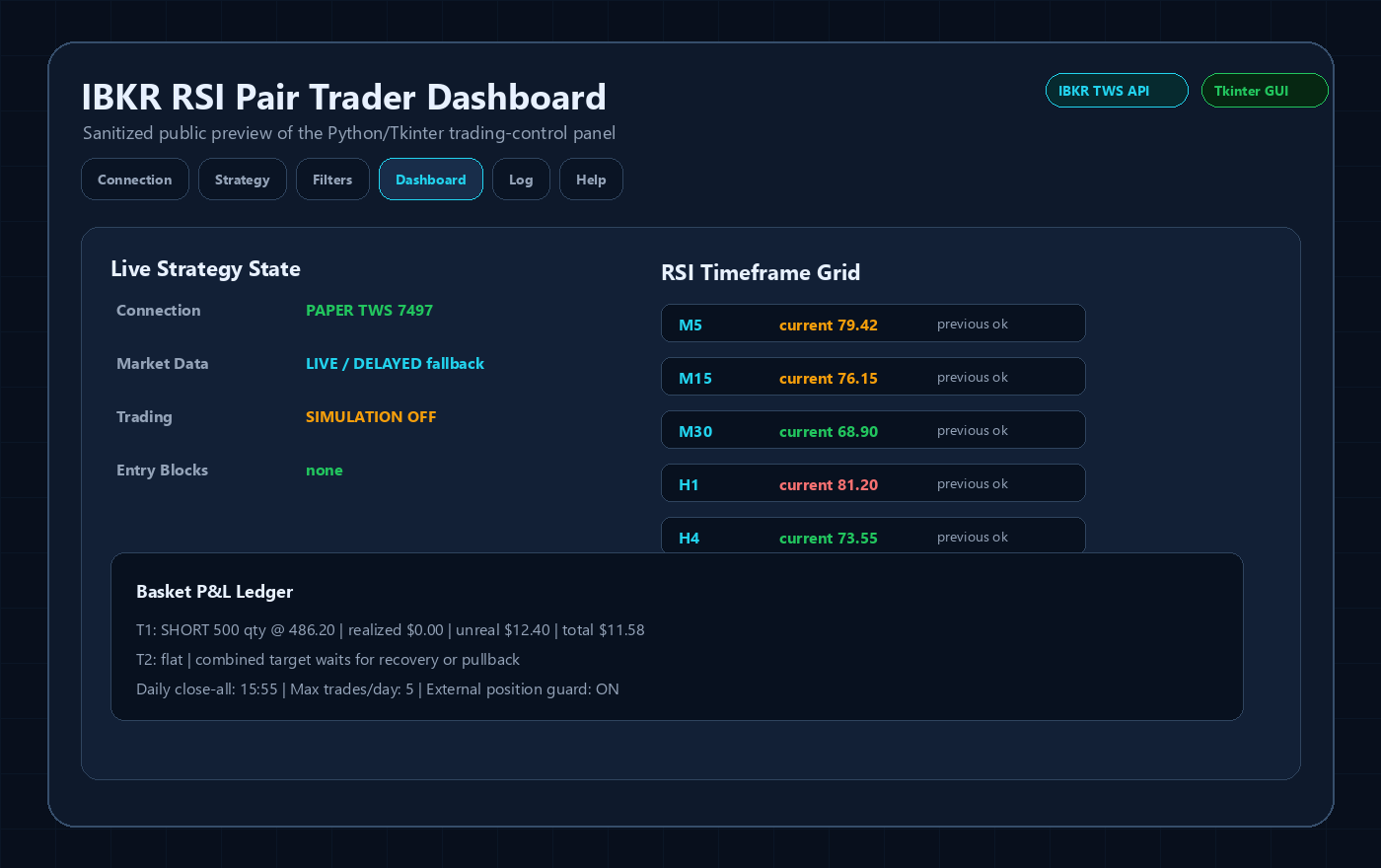
Interactive Brokers RSI Pair Trader
Tkinter desktop trading workflow, TWS API connection handling, RSI pair logic, risk controls and custom IBKR development positioning.
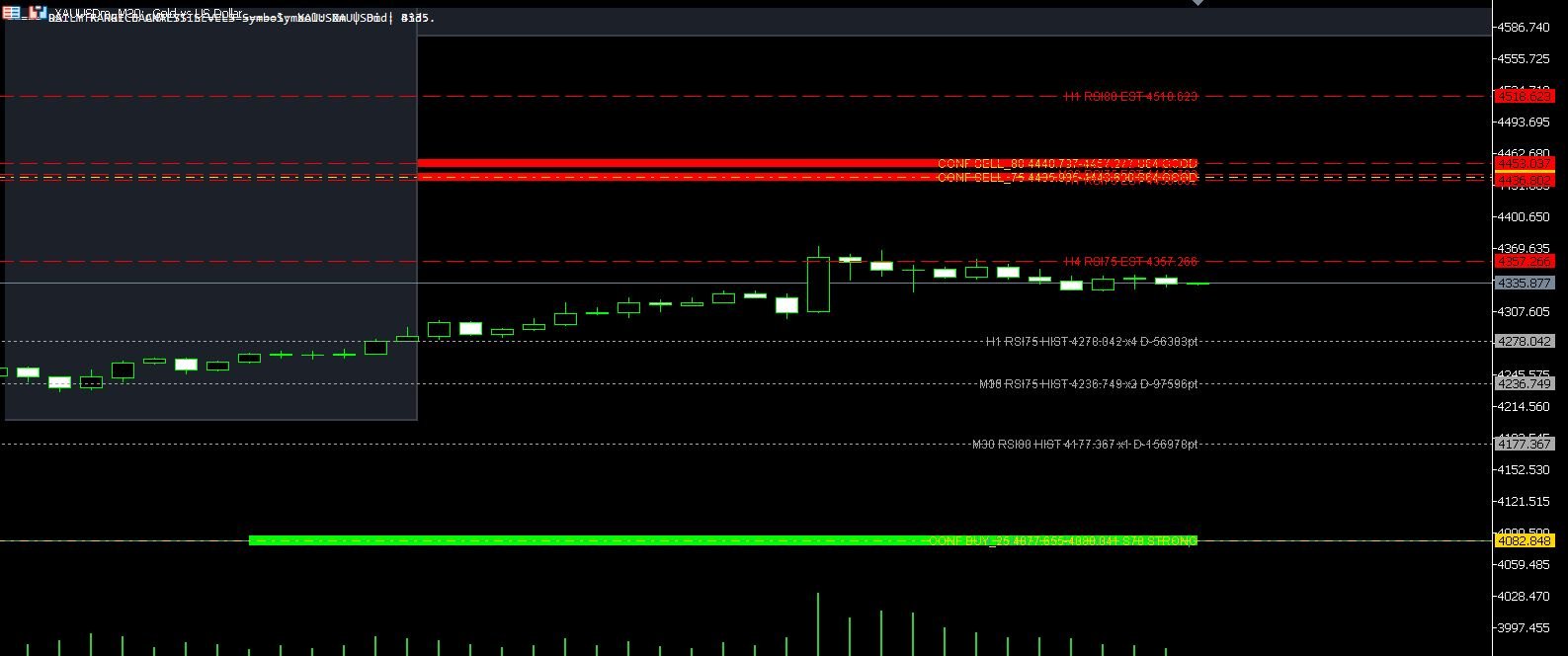
XAUUSD M30 CSV Data For Backtesting
Use clean MT5 historical data for Python backtests, strategy validation, spread checks and realistic gold EA research workflows.