Forex Trading Guidelines
Nineteen numbered rules every forex trader must follow — each one quantified, each one clickable into a free tool. Learn the basics, protect your capital, and trade like a process instead of a gamble.
The 19 Forex Trading Guidelines
Rules are useless until they have numbers attached. Every guideline below states the rule, the number to use, and the tool that applies it to your account.
Guideline 1 — Risk 0.5–2% of Your Account Per Trade
The single most important guideline in forex. Risk per trade = balance x risk %. On a $10,000 account at 1%, that is $100 per trade. Ten consecutive losing trades cost only 10% of capital — the account survives, so you survive. Professionals use 0.5–1%; never exceed 2%.
Guideline 2 — Set a Stop Loss on Every Trade, Before You Enter
A stop belongs where the setup is no longer valid — not where it feels comfortable. For a pullback trade, that is one pip below the swing low (long) or above the swing high (short). If the stop makes the risk bigger than Guideline 1 allows, skip the trade. Do not drag stops closer to force a position.
Guideline 3 — Cap Daily and Weekly Losses
Per-trade risk alone is not enough — a losing day must stop the day. Use a daily loss limit of 1–3% and a weekly limit of 5–6%. When the daily limit is hit, close the platform. This rule is exactly what prop firms enforce, and it is the one that prevents account blow-ups.
Guideline 4 — Never Take a Trade Below 1:2 Risk-Reward
If a trade risks $100, it must offer at least $200 of potential profit. At 1:2 you can lose 2 out of 3 trades and still break even. Below 1:2 the math is against you before you click. Wait for the setup that pays 2R, or don't trade.
Guideline 5 — The 3-5-7 Rule: Position, Daily and Weekly Limits
The "3-5-7 rule" is the compact version of Guidelines 1 and 3: risk no more than 3% of equity on all open positions combined, no more than 5% in one day, and no more than 7% in one week. Conservative traders divide these by two (1.5% / 2.5% / 3.5%). Sources describe the rule differently — this is the version that matches how brokers and prop firms report loss statistics.
Guideline 6 — The 90% Rule: Assume You Start in the Losing Majority
Broker and regulator disclosures consistently report that 70–90% of retail forex accounts lose money (ESMA: up to 89%; CFTC: most retail traders lose). The 90% rule is the guideline built on that fact: act like a statistic until your journal proves otherwise. Trade demo-sized risk, keep every guideline for at least 100 logged trades, and only scale up when your records show positive expectancy.
Guideline 7 — Know What 0.01 Lots Actually Means Before Trading Them
0.01 is a micro lot = 1,000 base units (or 1 oz of gold). On EURUSD it is worth $0.10 per pip; on USDJPY roughly $0.09; on XAUUSD 100 oz-per-lot contracts, $0.01 per pip. Micro lots are the correct starting size: a $100 account risking 1% with a 50-pip stop needs exactly 0.02 lots of EURUSD — small numbers, but the math is the math.
Guideline 8 — Cap Leverage to a Level Your Account Survives
Leverage multiplies both directions. Regulated retail caps: 30:1 majors / 20:1 gold (ESMA), 50:1 for some offshore regimes. The safe rule is not the regulator's cap but yours: never trade a position whose notional exceeds 10–20x equity until proven. At 1:100, a 1% move against you is 100% of your margin — that is one bad candle from liquidation.
Guideline 9 — No New Trades 30 Minutes Before or After High-Impact News
CPI, PMI, GDP and NFP releases cause spreads to widen and price to gap through every stop. The blackout rule: no new trades within 30 minutes of a high-impact release, and flatten before events you cannot afford to survive. Check the calendar first, every session, without exception.
Guideline 10 — Treat Demo Like Live (Size-Matched Demo)
Practicing with $100,000 virtual dollars teaches nothing about $1,000-account behaviour. The guideline: demo with the same account size, same leverage, same risk % you will trade live, and journal demo trades exactly like live ones. Pass your own guidelines for 100+ trades on demo before real money.
Guideline 11 — A Strategy Needs 9 Defined Parts (or It Isn't a Strategy)
An idea is not a strategy. A testable strategy must define: (1) market, (2) timeframe, (3) market context, (4) setup, (5) entry trigger, (6) stop-loss rule, (7) exit/target rule, (8) risk per trade, (9) no-trade conditions. If two traders cannot reach the same decision from the same chart, a part is missing. Write all nine before your next trade.
Guideline 12 — Journal Every Trade; Review Weekly
Record: pair, direction, size, entry, stop, target, exit, result in R, emotions, and any rule you broke. Review weekly (execution mistakes) and monthly (does the framework still fit the market?). Traders who journal catch their own leaks; traders who don't repeat them.
Guideline 13 — Trade Only Through a Regulated Broker You Verified
Check the regulator's own register, not the broker's website: CFTC/NFA (US), ESMA/FCA/CySEC (Europe/UK), ASIC (Australia), SBP/SECP (Pakistan), and your local authority. Red flags: guaranteed returns, no register listing, unlicensed affiliates, pressure to deposit fast. Regulated brokers keep client funds segregated and offer negative balance protection where required.
Guideline 14 — Never Martingale, Grid, or "Average Down"
Doubling size after a loss is a betting system, not a trading system: one long losing streak turns a 1% risk into a 100% account wipeout. The same logic kills grid strategies. If a strategy needs to survive losses by growing them, it has no edge — it has a countdown.
Guideline 15 — Trade Only in Liquid Sessions You Understand
Most retail losses concentrate in illiquid windows: after 17:00 NY, weekends, holidays, and lunch hours. The guideline: trade the London–New York overlap for the majors, avoid the 30-minute window after session opens and before closes, and never trade when your expected spread cost exceeds your edge.
Guideline 16 — Size by Account Size, Not by Feeling
The same 1% guideline produces completely different lots: on $500 with a 50-pip stop you trade 0.01–0.10 lots; on $10,000, 0.20–2.00; on $100,000, 2–20 depending on pip value. Never multiply size because a trade "feels certain". Size = risk $ / (stop pips x pip value per lot), always.
Guideline 17 — Withdraw Profits and Cut Size After Drawdown
Two payout rules professionals follow: withdraw regular profits monthly (the account you risked stays constant), and after a 5–6% drawdown, halve position size until equity recovers. These rules convert market gains into kept money and stop a losing streak from compounding itself.
Guideline 18 — Guidelines Apply to Algorithms Too (Especially Yours)
Every guideline in this list has a machine version: hard stop losses in code, risk % position sizing, max daily loss shutdown, max consecutive losses, and a news blackout filter. If you automate, the EA must obey the same rules a disciplined human would — most retail EAs fail because they encode martingale or no risk limits. Encode the guidelines instead.
Guideline 19 — Is Forex Legal Where You Live? Verify Before You Deposit
Forex legality varies by country: it is regulated in the US, UK, EU, Australia and Pakistan (SBP/SECP with licensed brokers), restricted in India, and prohibited in some jurisdictions. Verify your country's rules and your broker's license before depositing a single dollar — an unlicensed broker in a restricted country is a scam vector, not an opportunity.
Guideline Tools (Free, Text-Based)
Guideline Deep Dives
FAQ
What are the rules of forex trading?
The core rules: risk 0.5–2% per trade, use a stop loss on every trade, cap daily loss at 1–3% and weekly at 5–6%, never take a trade below 1:2 risk-reward, avoid martingale, keep a journal, and trade only through a regulated broker.
What is the 3-5-7 rule in forex?
The 3-5-7 rule sets three loss caps: no more than 3% of equity at risk across open positions, no more than 5% lost in one day, and no more than 7% in one week. Conservative traders halve all three numbers.
What is the 90% rule in forex?
Regulator and broker disclosures consistently show 70–90% of retail forex accounts lose money. The 90% rule means assuming you start in that majority: trade minimal size until a journal of 100+ trades shows positive expectancy, then scale up slowly.
What does 0.01 lot size mean?
0.01 is a micro lot — 1,000 base units of currency (or 1 oz of gold). It is worth about $0.10 per pip on EURUSD and $0.01 per pip on a 100 oz-per-lot gold contract. It is the standard starting size for beginners and small accounts.
Can I make $100 a day day-trading forex?
$100/day equals $2,000/month. To earn that while risking 1% per trade, you need roughly $10,000 of capital plus a proven edge — or you are implicitly risking far more than 1%. Chasing a daily dollar target is how traders break Guidelines 1, 3 and 6. Target process, not dollars.
What is the most important rule in forex trading?
Capital preservation: risk a small, fixed percentage per trade and never let a single trade or single day threaten your account. Every other guideline serves this one — an account that survives losing streaks can still trade; a blown account cannot.
How do I start forex trading for beginners?
Learn pip, spread and lot basics; pick one major pair; open a size-matched demo account; write a 9-part strategy (Guideline 11); journal 100+ demo trades; then fund only what you can lose and start with micro lots.
Is there a forex trading guidelines PDF?
Yes — open the One-Page Rulebook and press Ctrl+P (Cmd+P on Mac) to save it as a PDF, or use the built-in .txt download. It contains all 19 guidelines plus the risk tables on a single printable page.
Turn Guidelines Into Execution
Choose the next useful step
Most visitors arrive with one question: build, test, price, or trust. These shortcuts keep the path practical.
Go deeper before you build, download or automate
Hand-picked engineering articles, indicator breakdowns and trading-system tools so visitors keep exploring instead of leaving after one page.
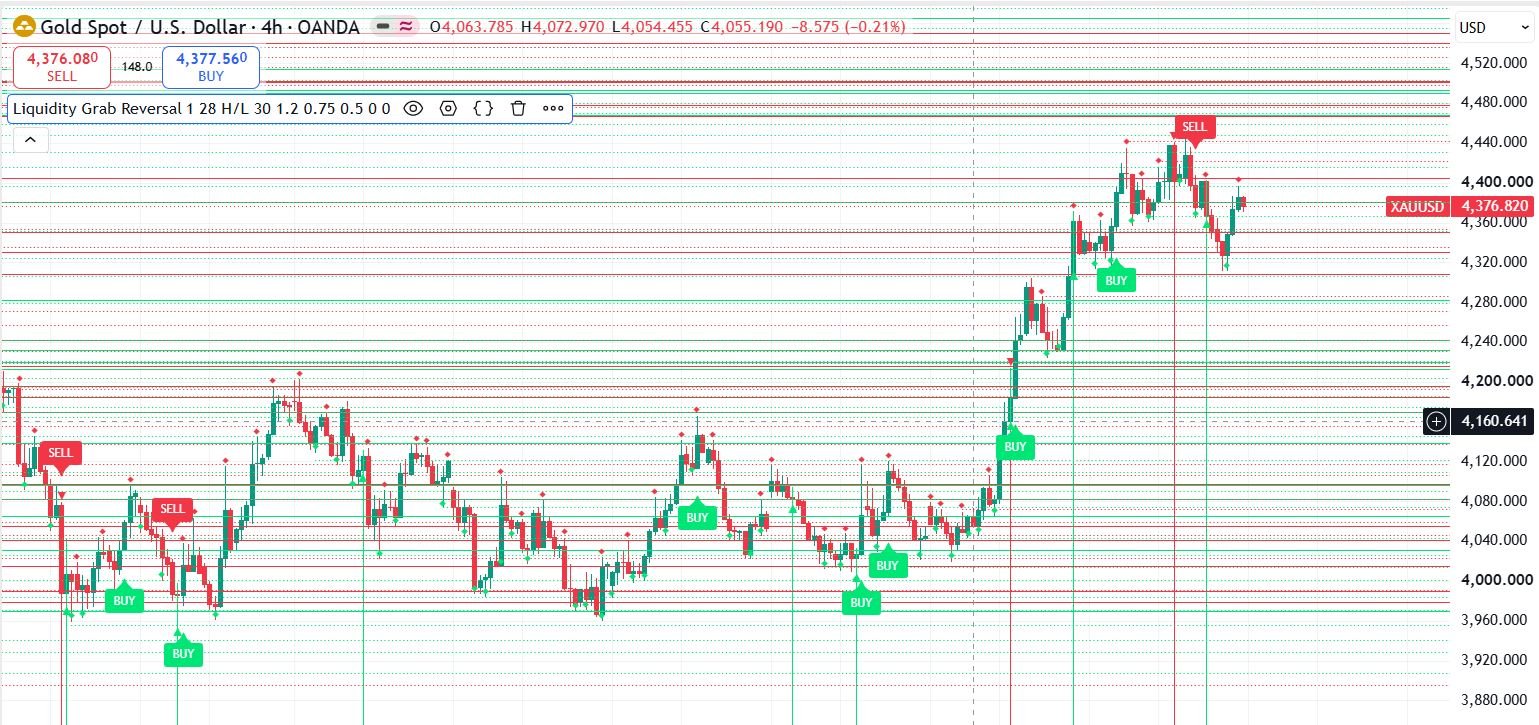
Pine Script to MT4/MT5 Conversion Planner
Analyze Pine strategies, repainting risk, TradingView alert bridges, MTF synchronization and the correct MQL4/MQL5 build path before paying for conversion.
Open planner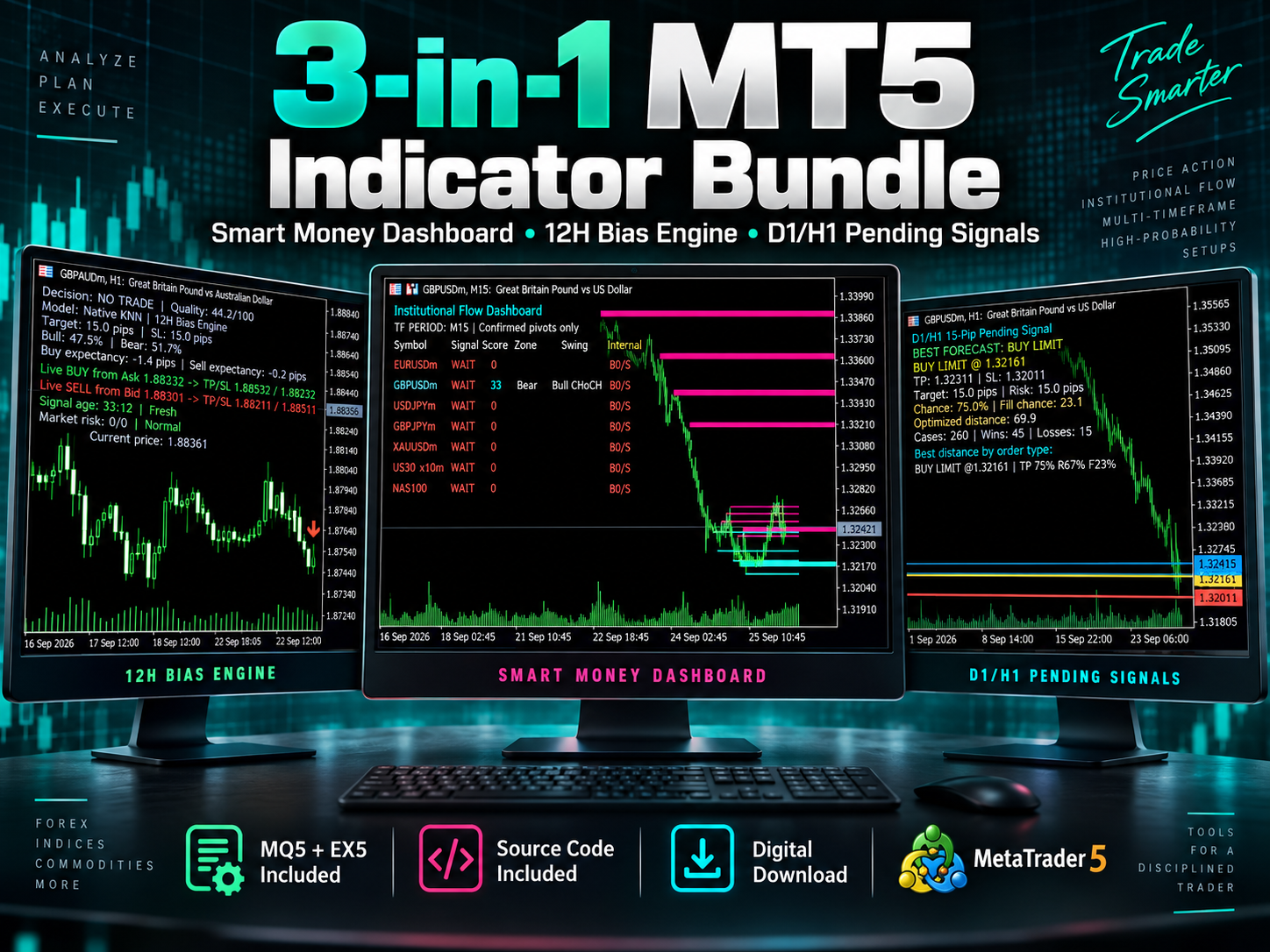
3-in-1 MT5 Indicator Bundle
12H Bias Engine, Smart Money Institutional Flow Dashboard and D1/H1 pending-signal logic with MQ5 + EX5 source included via Etsy.
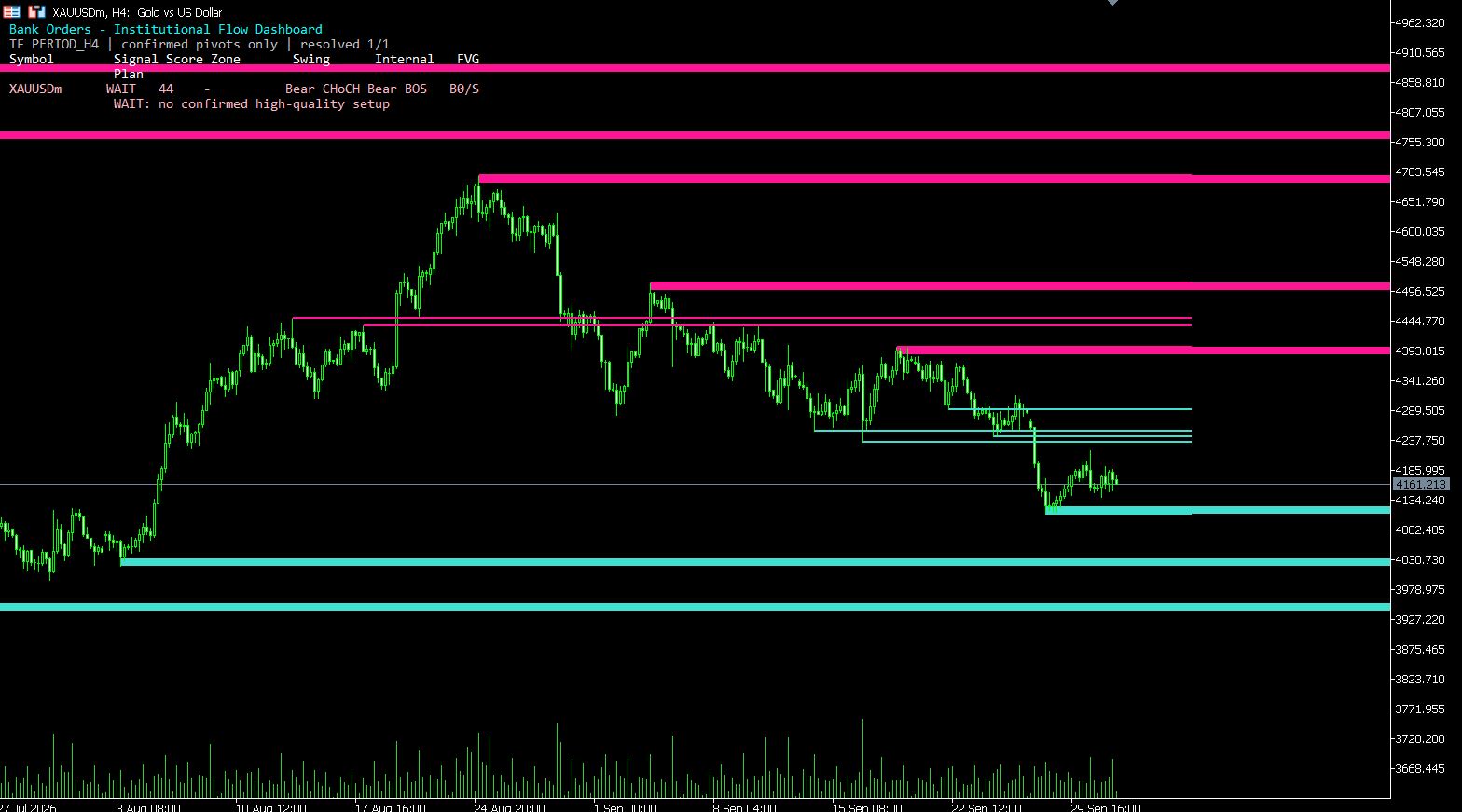
MT5 Bank Orders Institutional Flow Dashboard
Supply/demand zones, BOS/CHoCH, liquidity levels, FVG, equal highs/lows and confirmed trade-plan logic explained with EX5 download.
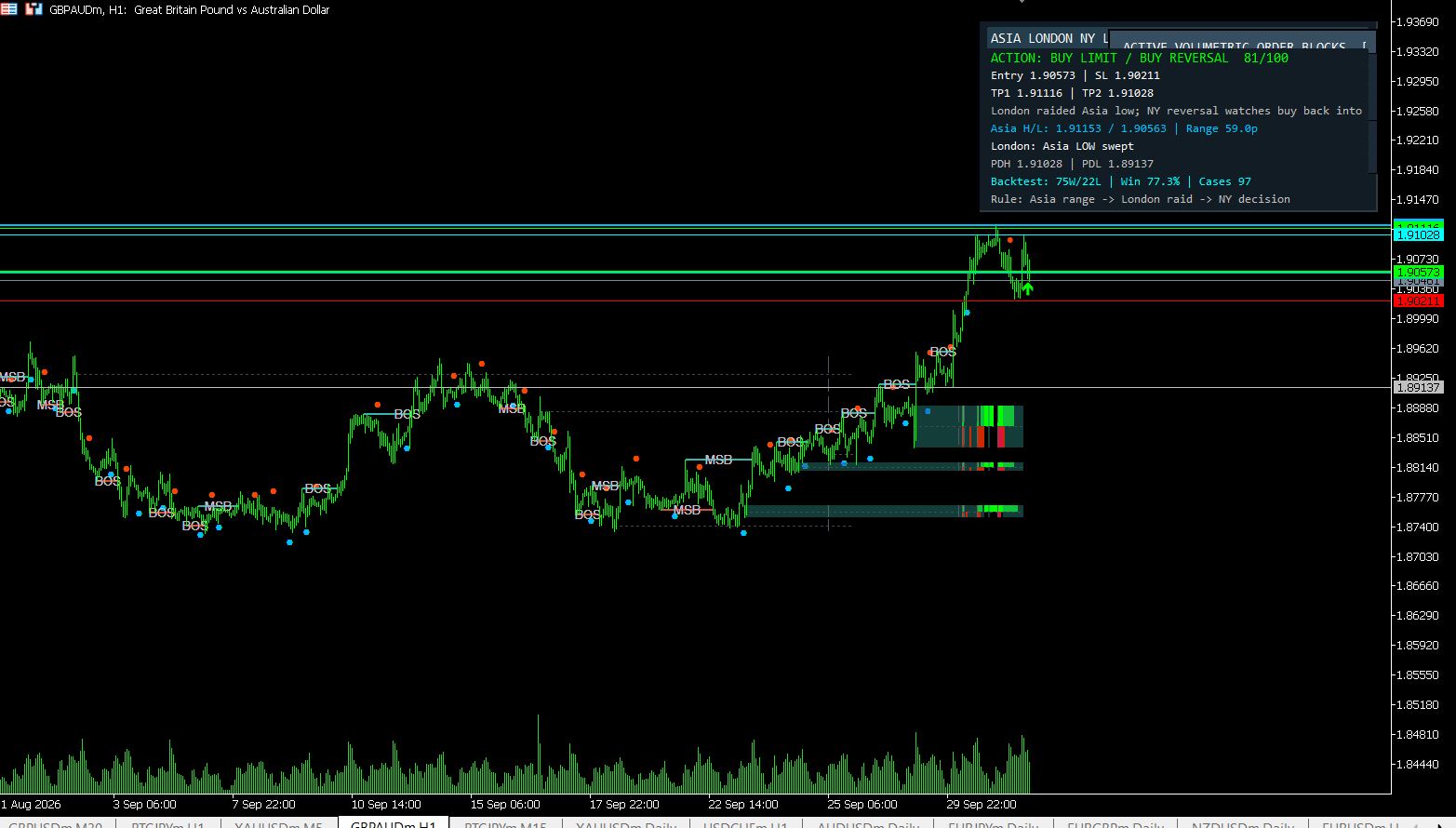
MT5 Asia London NY Liquidity Engine
Asia range, London raid and New York continuation/reversal planning with internal session backtest stats and entry/SL/TP dashboard.
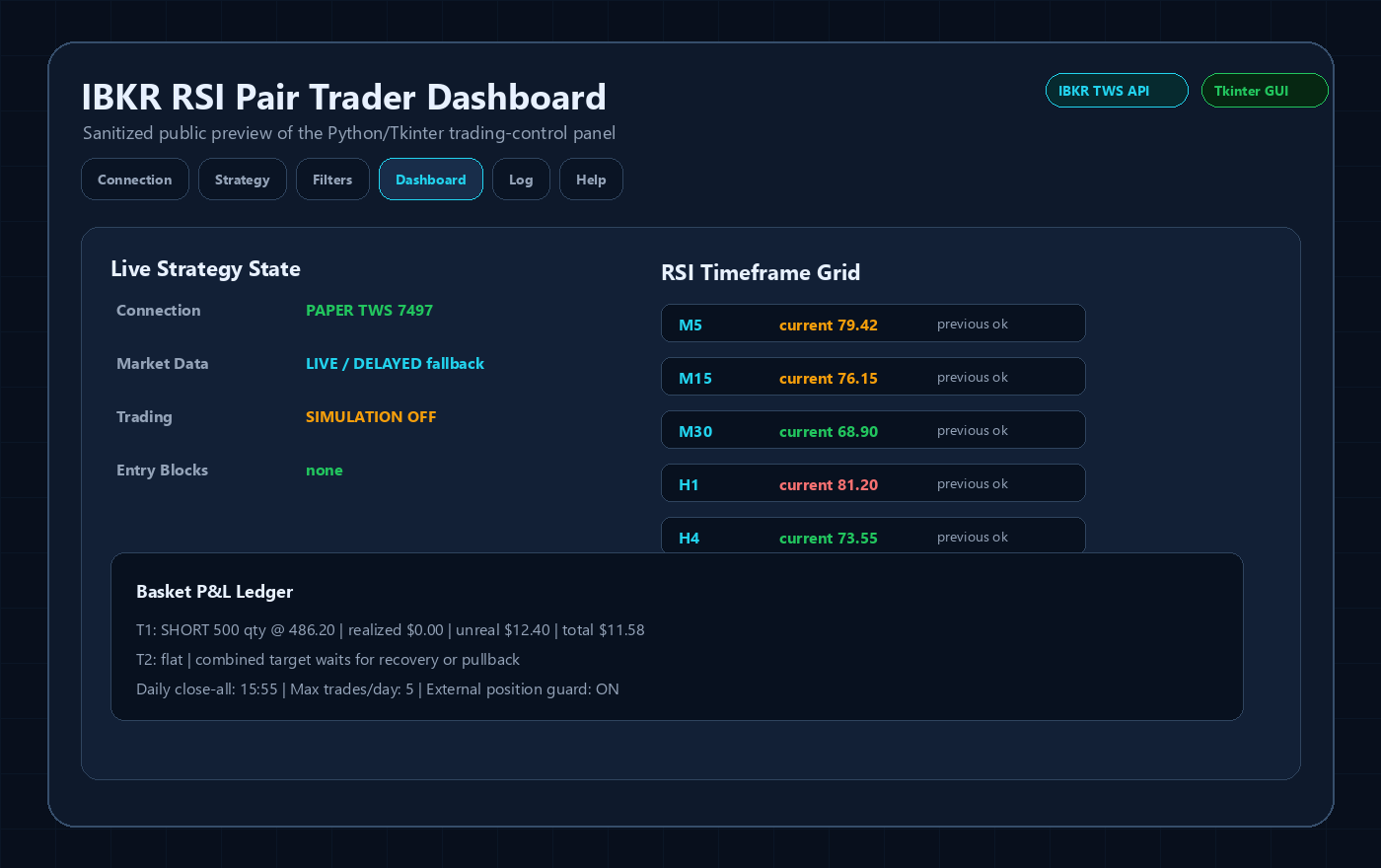
Interactive Brokers RSI Pair Trader
Tkinter desktop trading workflow, TWS API connection handling, RSI pair logic, risk controls and custom IBKR development positioning.
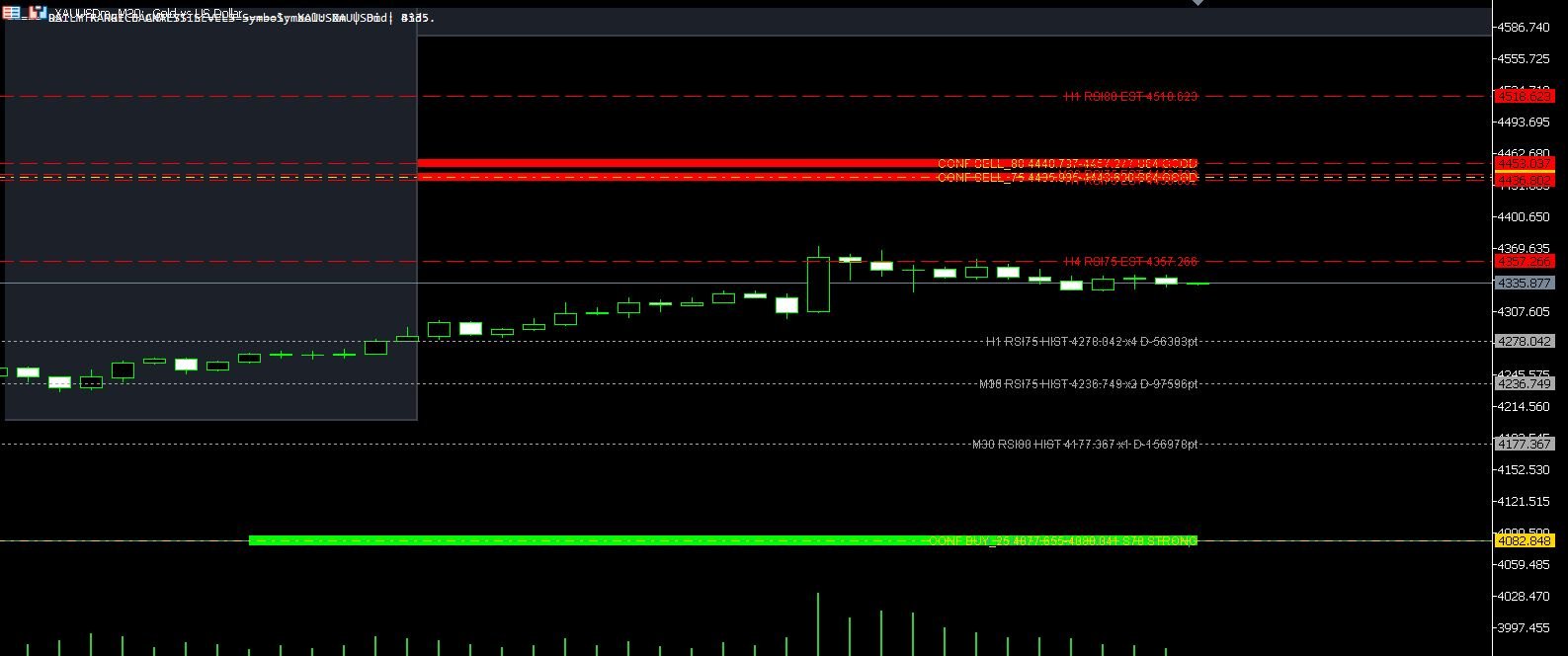
XAUUSD M30 CSV Data For Backtesting
Use clean MT5 historical data for Python backtests, strategy validation, spread checks and realistic gold EA research workflows.