Prop Firm Position Size Calculator
Enter your challenge rules and trade plan. The tool computes the maximum compliant lot size, your daily loss budget, drawdown room and profit target — so no single trade can ever breach FTMO-style limits.
How Prop Firm Compliance Math Works
Lot = (Balance × Risk%) ÷ (SL pips × Pip Value). The calculator then verifies the position's worst-case loss against three prop-firm walls: the daily loss budget, the total drawdown allowance, and the room left until your profit target. If any wall is crossed by a single trade, it flags the setup and suggests a compliant lot size instead.
Challenge rules vary by firm — always verify against your provider's dashboard. Need your EA to enforce these limits automatically? Our MT5 EA Development service embeds daily-loss, drawdown and profit-target guardrails directly in the code — or build one yourself with the free MT5 EA Builder.
FAQ
How is prop firm lot size calculated?
Lot = (Account × Risk%) ÷ (SL pips × pip value per lot). Example: $100,000 × 0.5% = $500 risk; 25 pips on EURUSD = $250 per lot → 2.00 lots maximum.
What is the daily loss limit in prop firm challenges?
Most firms (FTMO, FundedNext and similar) cap losses at 4–5% of the initial balance per day, measured from the previous day's equity. Your SL should never risk more than a fraction of that budget — typically 0.25–0.5% per trade.
How many trades can I take before hitting the daily loss limit?
Divide the daily budget by your per-trade risk. With a 5% daily limit and 0.5% risk per trade, ten consecutive full-stop losses consume the day — the calculator shows this as your daily trade capacity.
Why is gold (XAUUSD) pip value different?
A standard XAUUSD lot is 100 oz, so a $1.00 price move = $100 per lot. Most traders quote gold in 0.10 USD increments: 1 pip = 0.10 USD = $10 per lot. The calculator lets you switch between both bases.
Automate These Limits in Your EA
Convert calculator results into trade rules
Use pip value, lot size, spread and drawdown math as hard inputs in your EA or prop-firm rule set.
Go deeper before you build, download or automate
Hand-picked engineering articles, indicator breakdowns and trading-system tools so visitors keep exploring instead of leaving after one page.
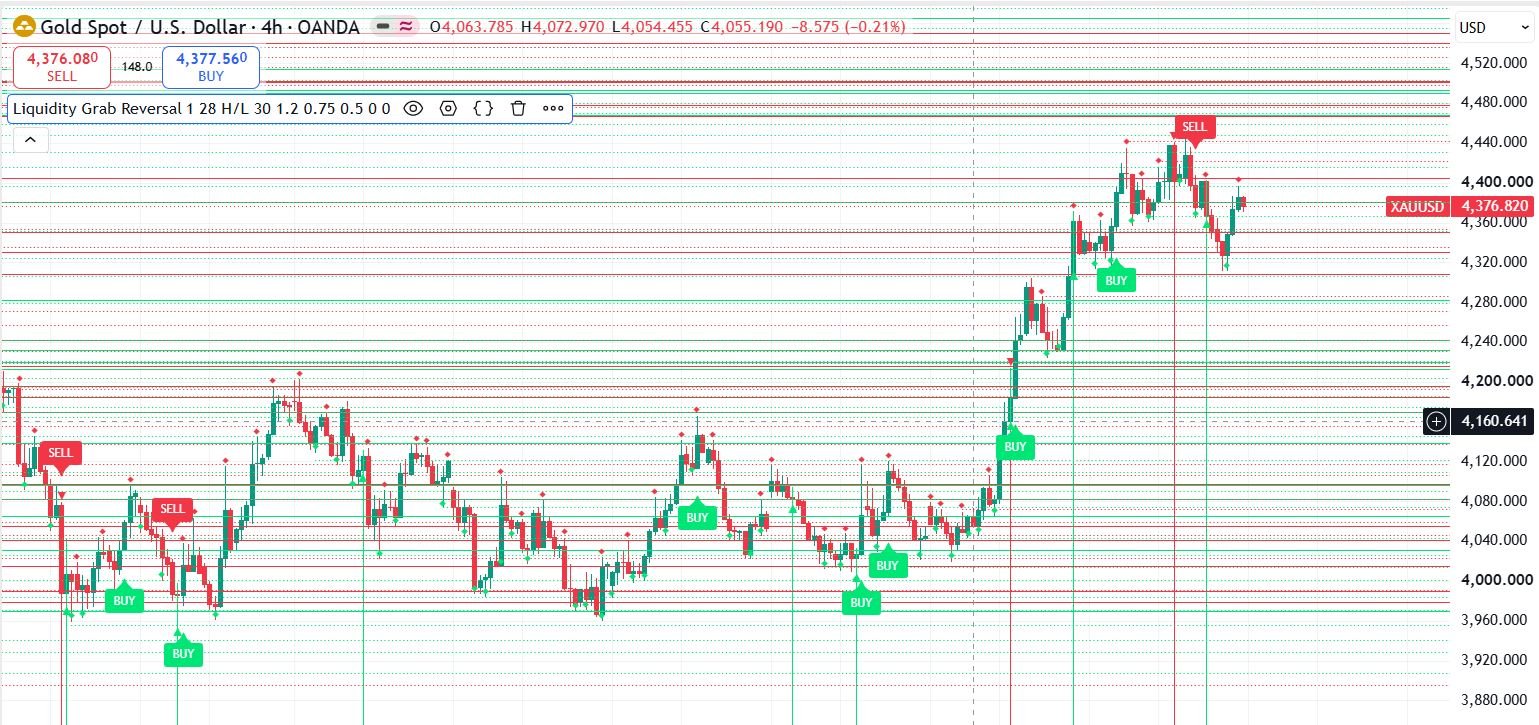
Pine Script to MT4/MT5 Conversion Planner
Analyze Pine strategies, repainting risk, TradingView alert bridges, MTF synchronization and the correct MQL4/MQL5 build path before paying for conversion.
Open planner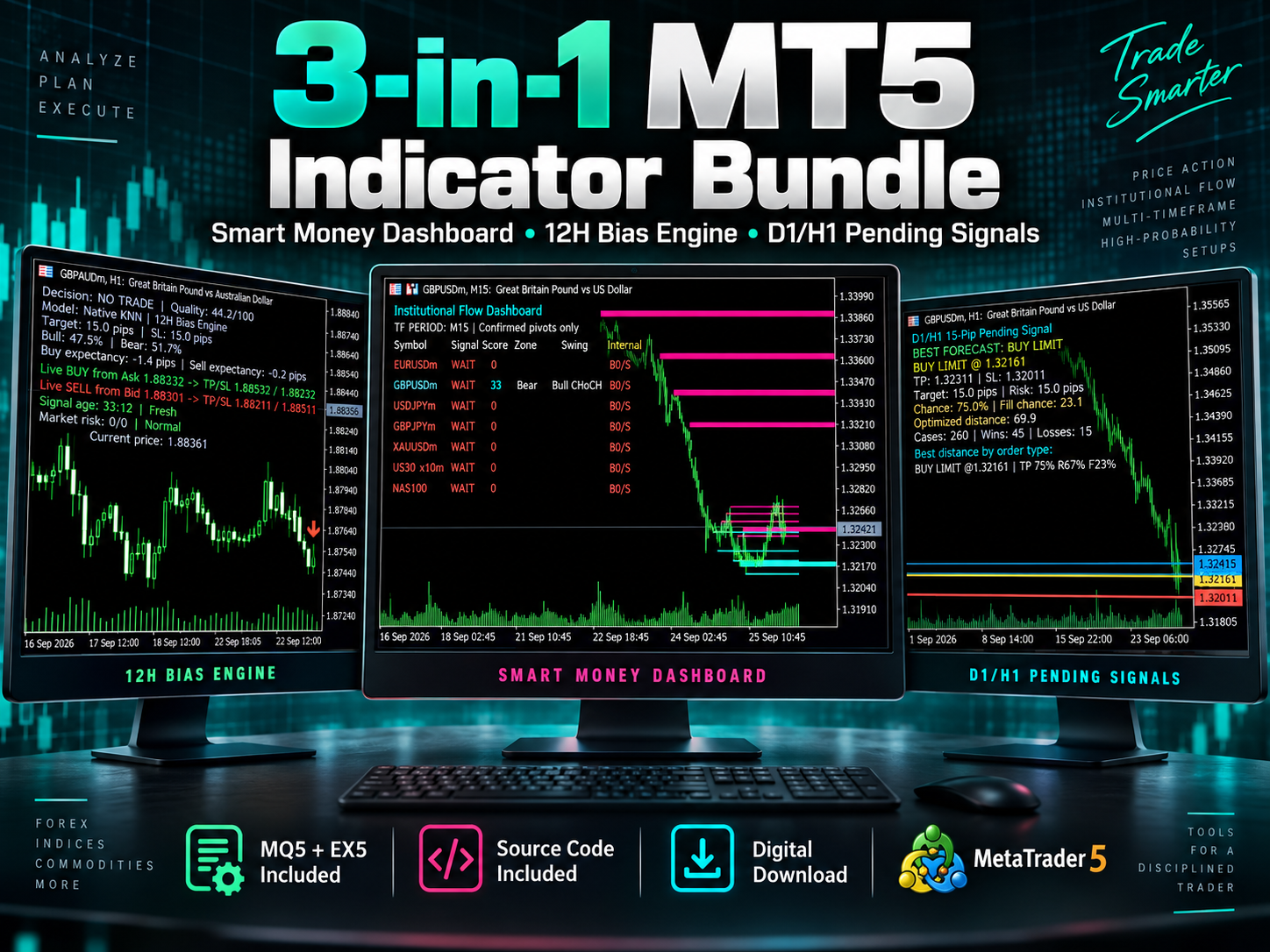
3-in-1 MT5 Indicator Bundle
12H Bias Engine, Smart Money Institutional Flow Dashboard and D1/H1 pending-signal logic with MQ5 + EX5 source included via Etsy.
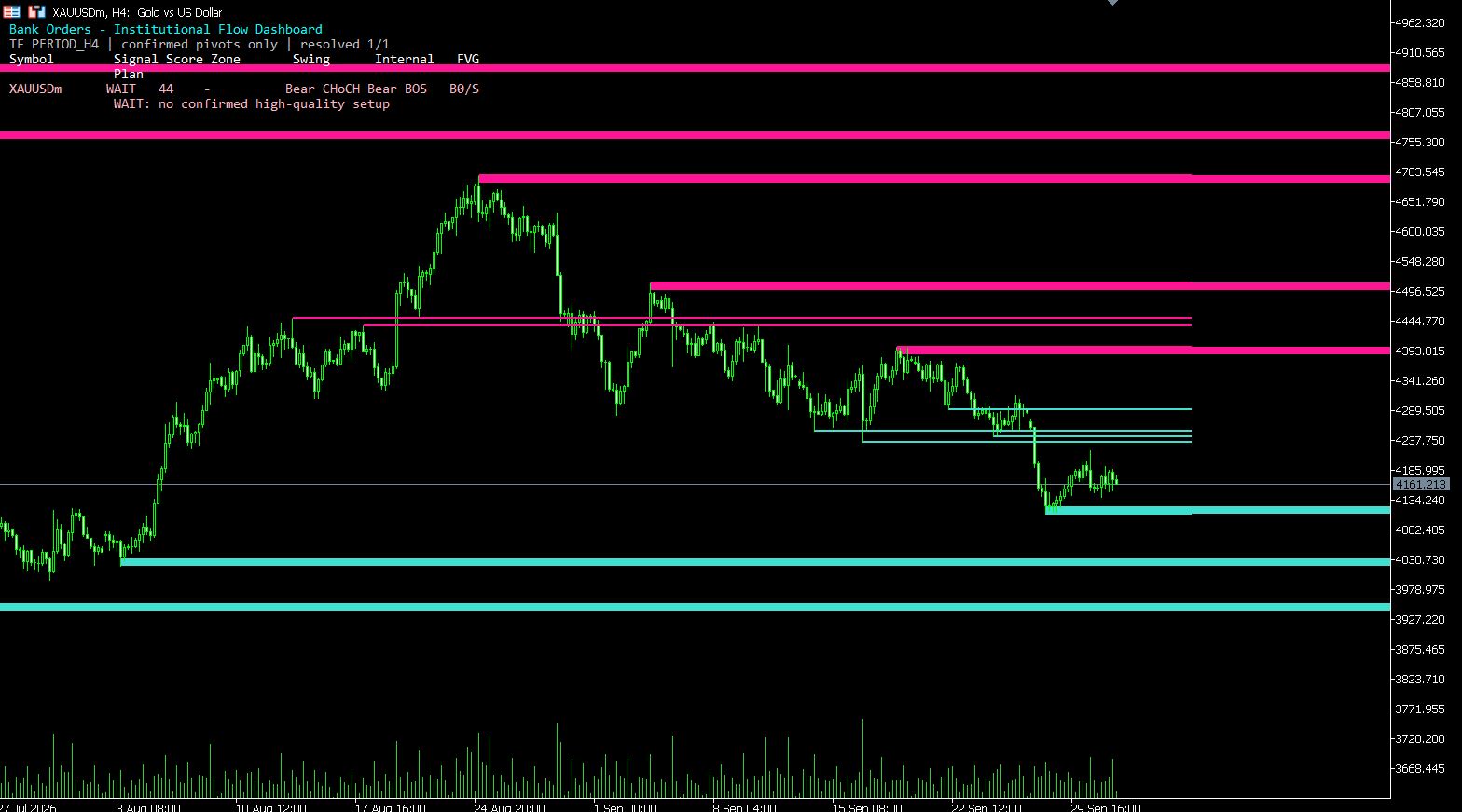
MT5 Bank Orders Institutional Flow Dashboard
Supply/demand zones, BOS/CHoCH, liquidity levels, FVG, equal highs/lows and confirmed trade-plan logic explained with EX5 download.
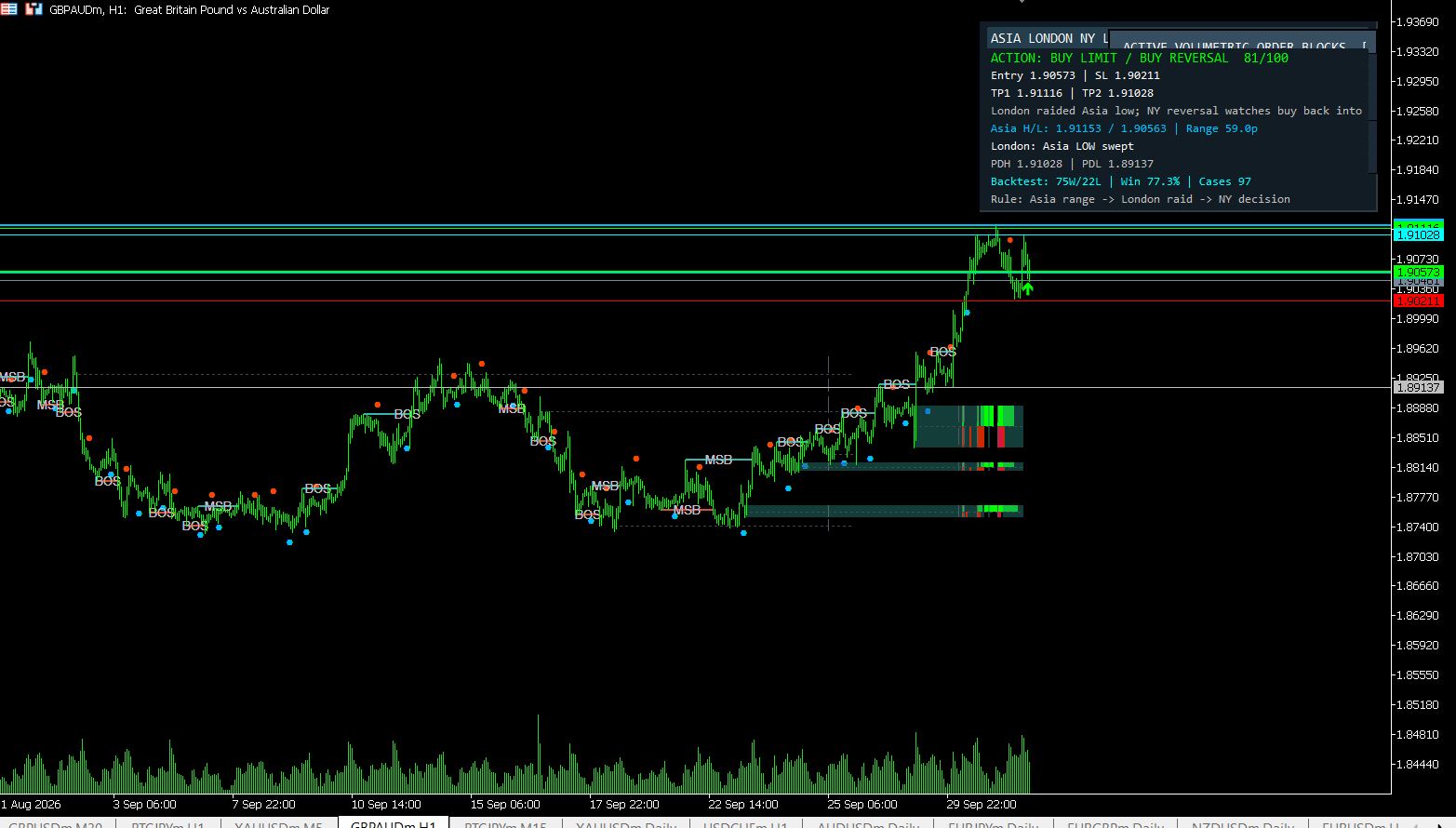
MT5 Asia London NY Liquidity Engine
Asia range, London raid and New York continuation/reversal planning with internal session backtest stats and entry/SL/TP dashboard.
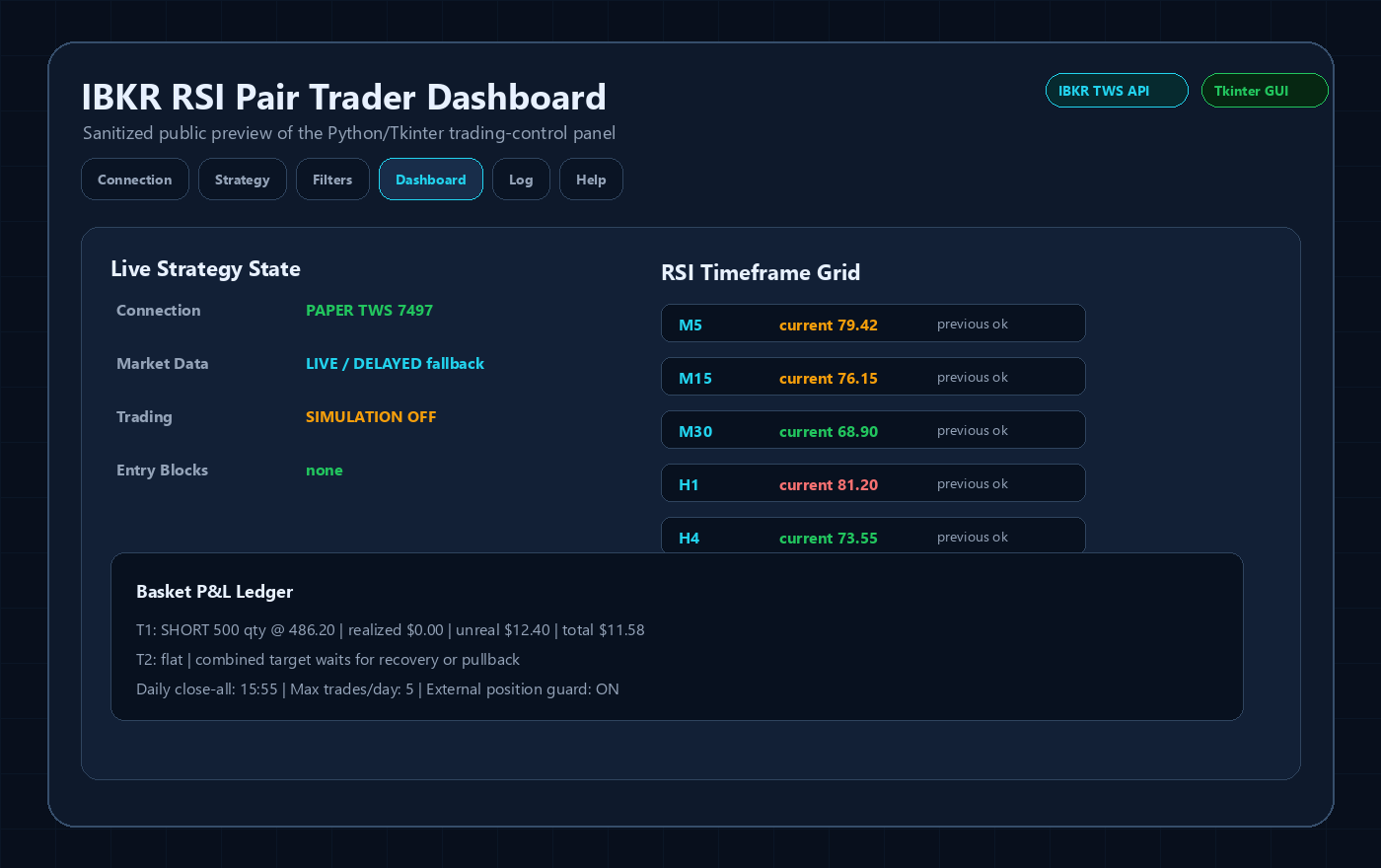
Interactive Brokers RSI Pair Trader
Tkinter desktop trading workflow, TWS API connection handling, RSI pair logic, risk controls and custom IBKR development positioning.
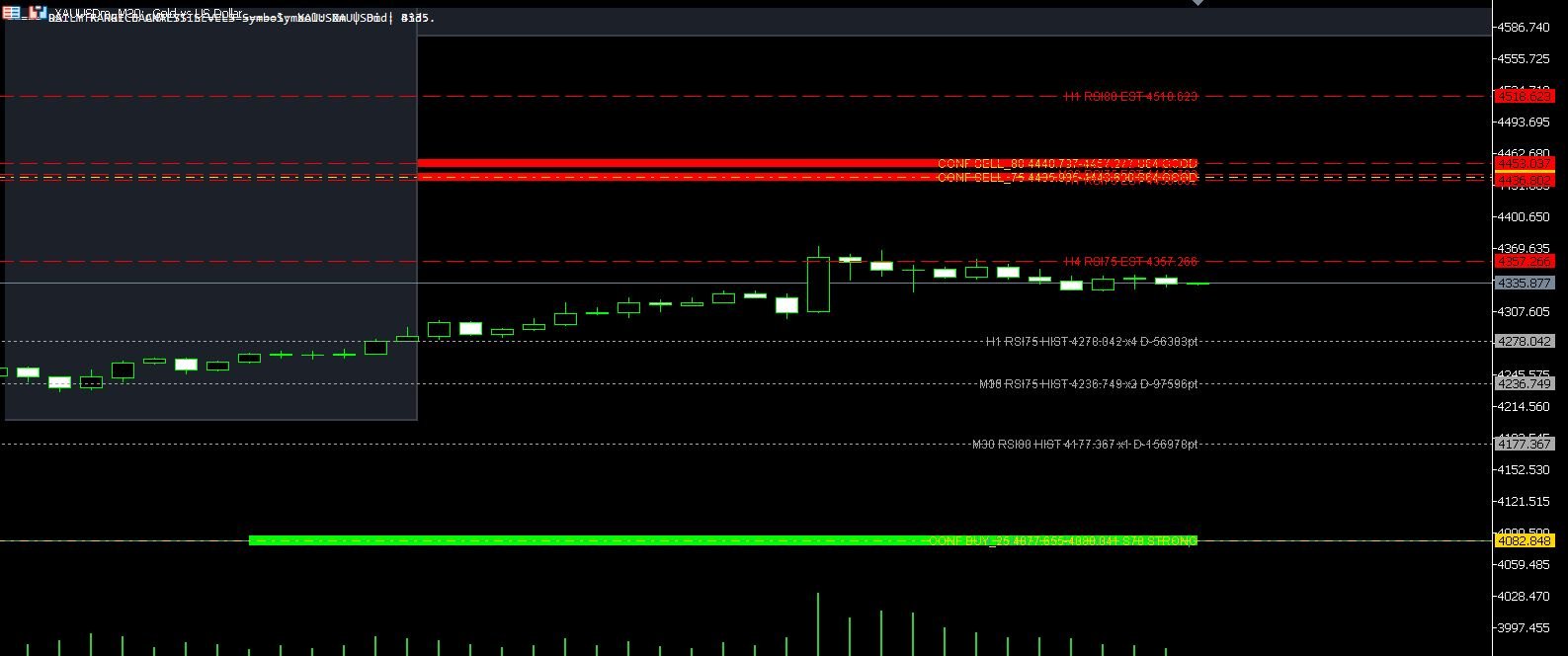
XAUUSD M30 CSV Data For Backtesting
Use clean MT5 historical data for Python backtests, strategy validation, spread checks and realistic gold EA research workflows.