Buy the Dip EA for MT5: What a Credible Build Must Specify
Before buying or commissioning an EA, demand a strategy contract, implementation boundaries, risk controls and evidence that can be reproduced on your data.
Quick answer
A credible buy-the-dip EA should expose the trend timeframe, dip measurement, confirmation, invalidation, risk budget, session and spread limits while protecting unsafe settings. It should identify its own orders, handle broker specifications, log every decision, include source code under the agreed license and pass signal-parity plus failure-path tests before live use.
The buyer and developer acceptance contract
A feature list is not enough. Each item needs an observable acceptance condition so delivery is judged against agreed behavior rather than a screenshot.
| Decision | Testable rule | Why it matters |
|---|---|---|
| Strategy specification | Versioned document for every signal, exit, timing and reset rule. | Prevents disputes over discretionary interpretations. |
| Input validation | Reject unsafe, contradictory or unsupported combinations. | Inputs should not permit negative risk or impossible stops. |
| Order ownership | Symbol, magic number and account-mode behavior documented. | Protects unrelated positions and handles netting explicitly. |
| Risk engine | Monetary sizing, max open risk, daily loss and cooldown rules. | Signal quality cannot compensate for uncontrolled exposure. |
| Execution | Spread, stop-level, margin, result-code and retry behavior tested. | Live orders fail in ways a signal-only backtest does not show. |
| Diagnostics | Timestamped state, signal, order and error logs. | The operator can reproduce why an entry did or did not occur. |
| Evidence package | Data assumptions, tester settings, report and trade list. | A screenshot alone cannot be independently checked. |
| Delivery | Source, compiled file, setup guide, presets and support boundary. | Ownership and maintenance expectations are explicit. |
Start with a one-page strategy specification
The document should state symbol scope, higher and entry timeframes, reference high, ATR period, permitted depth, location rule, confirmation, invalidation, target or exit, maximum holding time and re-entry reset. Use examples for edge cases such as gaps, missing indicators, a signal during an open position and a trend change while an order is pending.
Avoid buying an EA described only as "AI dip detector" or "institutional reversal logic." Those phrases do not establish behavior. Ask which inputs are actually observed, how they are calculated and which exact condition prevents the next lower price from triggering another order.
Inputs need ranges and dependencies
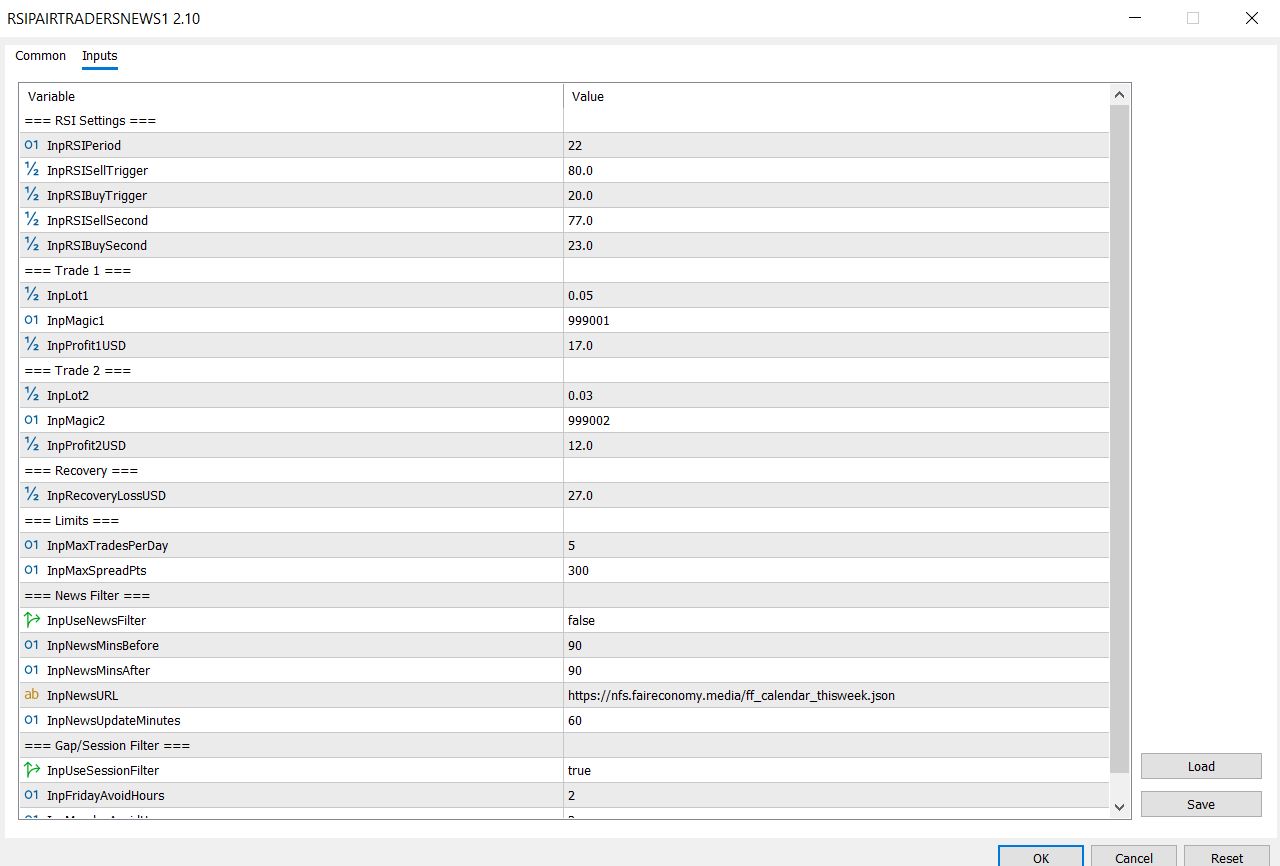
An input panel should group strategy, risk, execution, session and diagnostic settings. Each numeric input needs a valid range. Dependencies should be enforced: a news blackout duration is irrelevant when the news filter is disabled, percentage risk requires a valid stop, and a multi-timeframe rule requires data for both timeframes.
Presets are starting configurations, not evidence of profitability. Record the symbol format, broker, timeframe and test period for each preset. A portable EA should query symbol properties rather than hardcode assumptions, but strategy thresholds may still need fresh validation on every market.
- Strategy: regime, depth, location, trigger and exit.
- Risk: risk mode, maximum volume, daily lock and portfolio cap.
- Execution: spread, deviation, retry policy and order expiration.
- Operations: session timezone, event behavior and log level.
Ask for evidence that can be reproduced
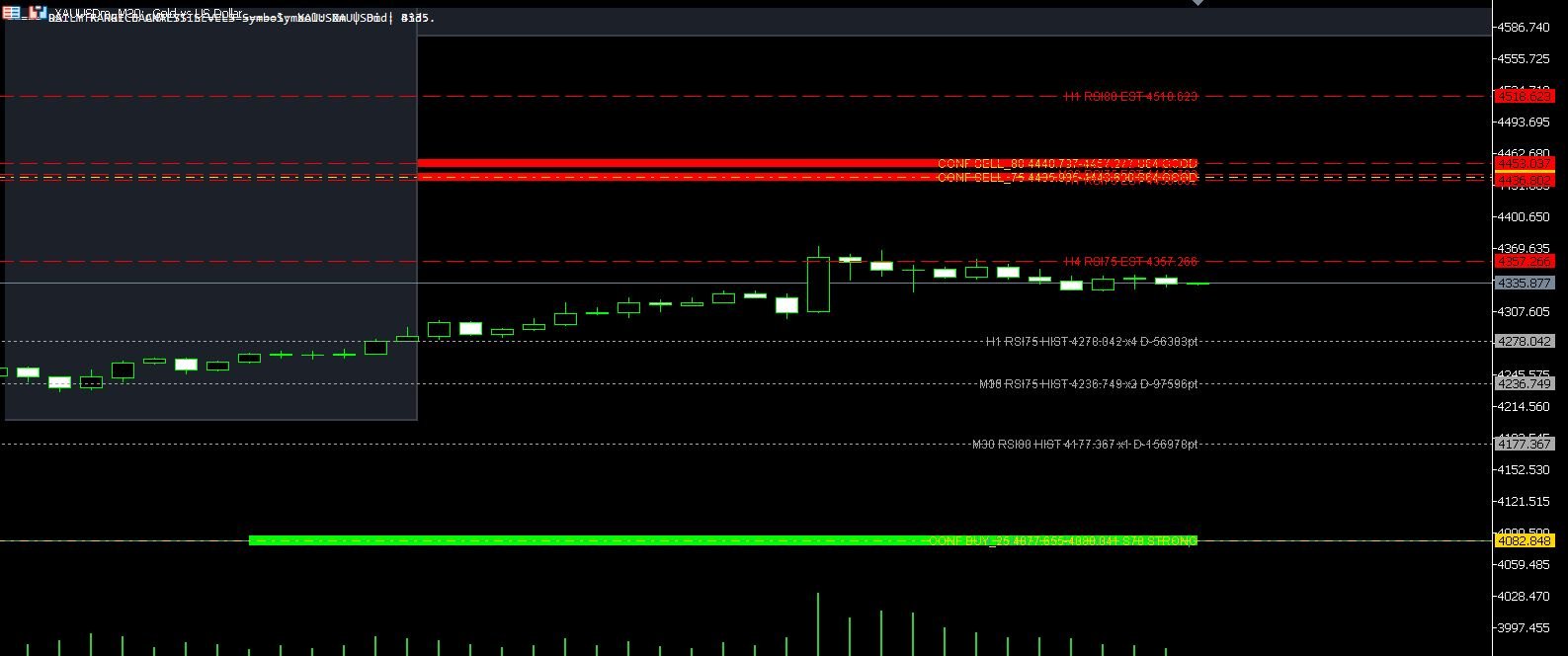
A useful evidence package includes the EA version, parameter file, symbol specification, data range, modeling mode, costs, starting balance and complete trade list. The report should separate development and untouched periods and show drawdown, exposure, consecutive losses and cost sensitivity. Screenshots can illustrate the interface but should not substitute for files and assumptions.
Re-run the test on your terminal and investigate differences. Broker history, timezone, spread and contract settings can change results. Small discrepancies are expected; unexplained signal differences indicate that the strategy or test environment is not fully specified.
Operational behavior belongs in the product
The EA should make its state visible: disabled, trend eligible, waiting for pullback, waiting for confirmation, order pending, position managed or cooldown. Logs should explain blocked trades without printing sensitive account details. An on-chart panel can summarize status, but it must not become a second source of strategy logic.
Specify restart behavior. Pending state, daily baseline and cooldown may need persistence, while stale signals should expire. Decide what happens if the terminal reconnects after price has crossed both entry and stop. A safe default is to revalidate current state rather than reconstruct an imaginary fill.
Source-code and support terms should be explicit
Confirm whether delivery includes MQ5 source, EX5 build, third-party dependencies, license limits and the right to modify the code. Proprietary libraries should be named before agreement. Strategy ownership, confidentiality and reuse terms belong in the contract, especially when the client supplies private rules.
Define what support covers: defects against the approved specification, broker-format adjustments, installation help or strategy changes. New filters and revised entry logic are feature changes, not bug fixes. A clean acceptance test keeps that boundary fair to both client and developer.
A practical EA acceptance suite
Acceptance combines expected trades with expected non-trades and operational failures. A robot that enters correctly but ignores shutdown rules is not complete.
| Test | Record | Reject the idea when |
|---|---|---|
| Golden signals | Known charts with expected state transitions and entries. | Timestamp or reason differs from the approved specification. |
| Negative cases | Broken trend, excessive spread, event block and duplicate setup. | The EA opens a trade that should be blocked. |
| Risk cases | Several stop distances, symbols and account sizes. | Monetary risk exceeds tolerance after normalization. |
| Execution failures | Invalid stops, rejection, disconnection and restart. | The EA loops, duplicates or trades with stale state. |
| Delivery replay | Fresh terminal installation using supplied guide and preset. | Required dependencies or assumptions are missing. |
Frequently asked questions
Can I buy a ready-made buy-the-dip EA?
You can, but verify the exact rules, symbol assumptions, test data, costs, source-code terms and risk controls. A generic label does not establish suitability.
What inputs should a dip-buying EA include?
At minimum: trend timeframe, dip-depth method, location, confirmation, invalidation, position risk, spread and session limits, re-entry reset and account shutdown rules.
Should the EA include martingale recovery?
Not by default. Martingale changes the risk model and can create rapidly increasing exposure. A fixed-risk, finite-entry design is easier to bound and validate.
What should be delivered with a custom MT5 EA?
The agreed source and compiled files, specification, settings, setup guide, evidence package, acceptance results and clearly defined support terms.
Continue through the buy-the-dip cluster
Use the pillar as the central definition, then move to the page that matches the decision you are trying to formalize.
Technical references
Commission the EA against written acceptance tests
AlgoSpecial provides fixed-scope MT5 development with source code, documented rules, broker-aware risk and a reproducible validation plan.
Request a custom EA quoteEducational research only. A dip-buying rule can lose money, fail in a new regime, gap through a stop, or behave differently across brokers and instruments. Backtests are hypothetical and must include realistic costs. MetaTrader, MT5, TradingView and other product names are used descriptively; their owners retain associated trademarks. AlgoSpecial is not affiliated with or endorsed by those owners.