How the Institutional Flow Engine Builds Trade Plans
Every plan on the live Bank Orders dashboard is assembled from the same eight evidence layers. Here is exactly what the engine measures and why.
1. Supply & Demand Order Blocks
Confirmed pivot highs and lows create zones where institutional orders were likely placed. A bearish supply block sits above price; a bullish demand block sits below. Zones broken by a close are discarded, so only fresh, unmitigated interest remains.
2. Market Structure — BOS & CHoCH
The engine replays swing pivots bar by bar. A close beyond the last swing high/low in trend direction is a Break of Structure (continuation); the first break against the trend is a Change of Character (reversal warning). Both the major swing structure and the internal structure are tracked separately.
3. Liquidity Pools & Sweeps
Equal highs/lows and pivot extremes form liquidity pools where stop orders rest. When price raids a pool and closes back inside, the sweep is recorded — a classic signature of smart-money accumulation or distribution.
4. Fair Value Gaps (Imbalance)
Three-candle imbalances that remain unfilled act as magnets. The engine counts live bullish and bearish FVGs and uses their balance as directional evidence.
5. Premium / Discount Positioning
Within the current dealing range, buying in discount and selling in premium improves the reward-to-risk of any plan. The engine labels price as Premium, Premium+, Equilibrium, Discount or Discount+.
6. Multi-Timeframe Alignment
Trend direction is measured on M15, H1, H4 and D1 (EMA 50 vs EMA 200). Alignment across timeframes raises confidence; conflict lowers it or forces WAIT.
7. Order Plan Selection — Limit vs Stop vs Instant
With a bullish bias and price above a fresh demand zone, the engine builds a Buy Limit at the zone. If price is already inside the zone, it is a Buy Now. If there is no zone below but buy-side liquidity sits above, the engine switches to a Buy Stop breakout plan — and mirrored logic for Sell Limit / Sell Now / Sell Stop.
8. Stop, Targets & the AI Reasoning
Stops sit beyond the zone or structure with an ATR/spread buffer. TP1 targets the nearest opposing structure, TP2/TP3 extend at R:R multiples. Every card lists the bullish evidence, the bearish evidence and — for WAIT states — exactly what is missing.
Methodology FAQ
What is institutional order flow?
Institutional order flow is the study of where large market participants leave evidence of their orders: supply and demand zones, market structure breaks, liquidity sweeps and imbalance gaps. The engine tracks these footprints and converts them into executable plans.
What is a BOS and a CHoCH?
A Break of Structure (BOS) confirms trend continuation when price closes beyond the last swing point in the trend direction. A Change of Character (CHoCH) is the first break against the trend, warning of a potential reversal.
Why does the engine prefer order blocks for entries?
Order blocks mark the origin of the impulse that broke structure. Price frequently returns to them before continuing, which produces a well-defined entry with a logical stop beyond the zone.
How is confidence calculated?
Confidence combines zone quality, swing and internal structure events, premium/discount location, FVG balance, liquidity sweep activity and 4-timeframe (M15/H1/H4/D1) alignment. Plans below the confirmation threshold become WAIT.
See the Engine Live
All eight layers, converted into live order plans with timestamps.
Choose the next useful step
Most visitors arrive with one question: build, test, price, or trust. These shortcuts keep the path practical.
Go deeper before you build, download or automate
Hand-picked engineering articles, indicator breakdowns and trading-system tools so visitors keep exploring instead of leaving after one page.
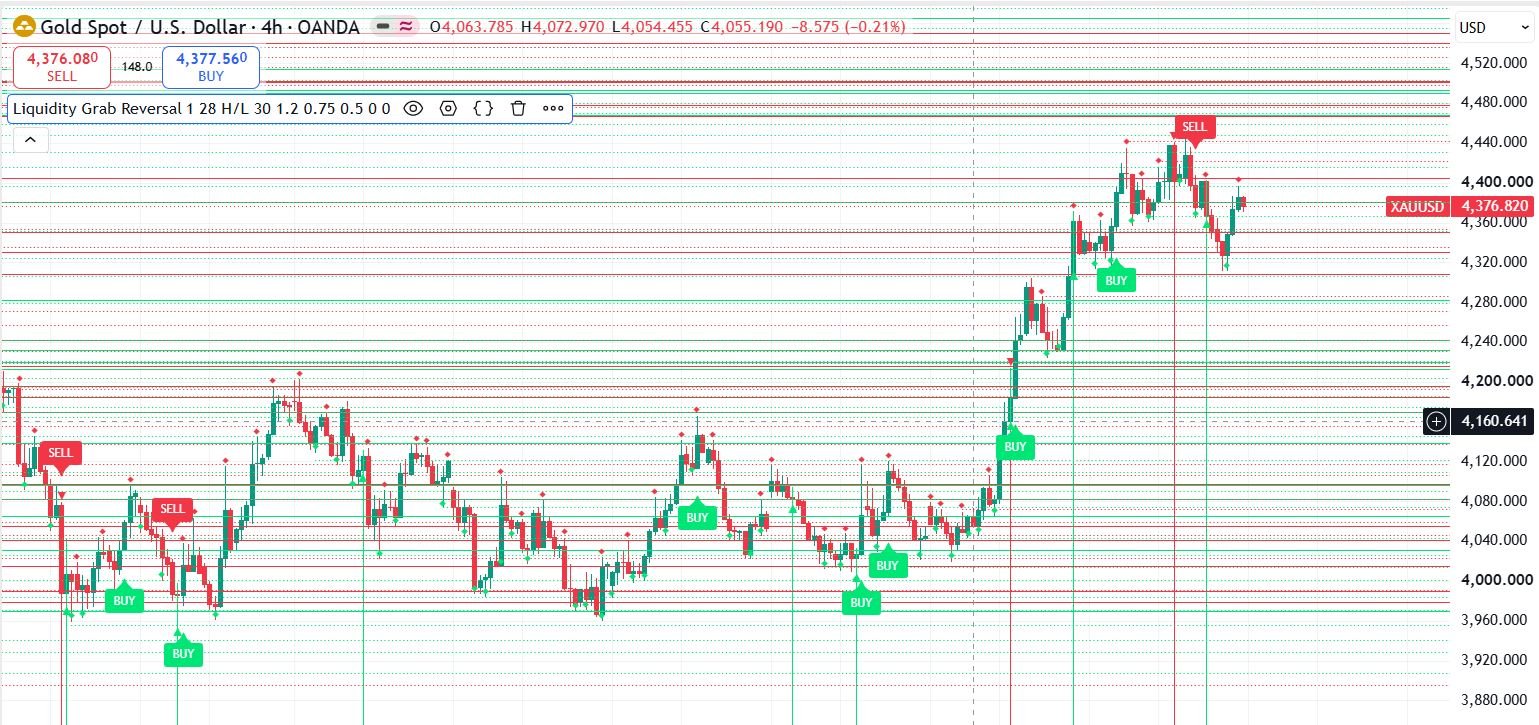
Pine Script to MT4/MT5 Conversion Planner
Analyze Pine strategies, repainting risk, TradingView alert bridges, MTF synchronization and the correct MQL4/MQL5 build path before paying for conversion.
Open planner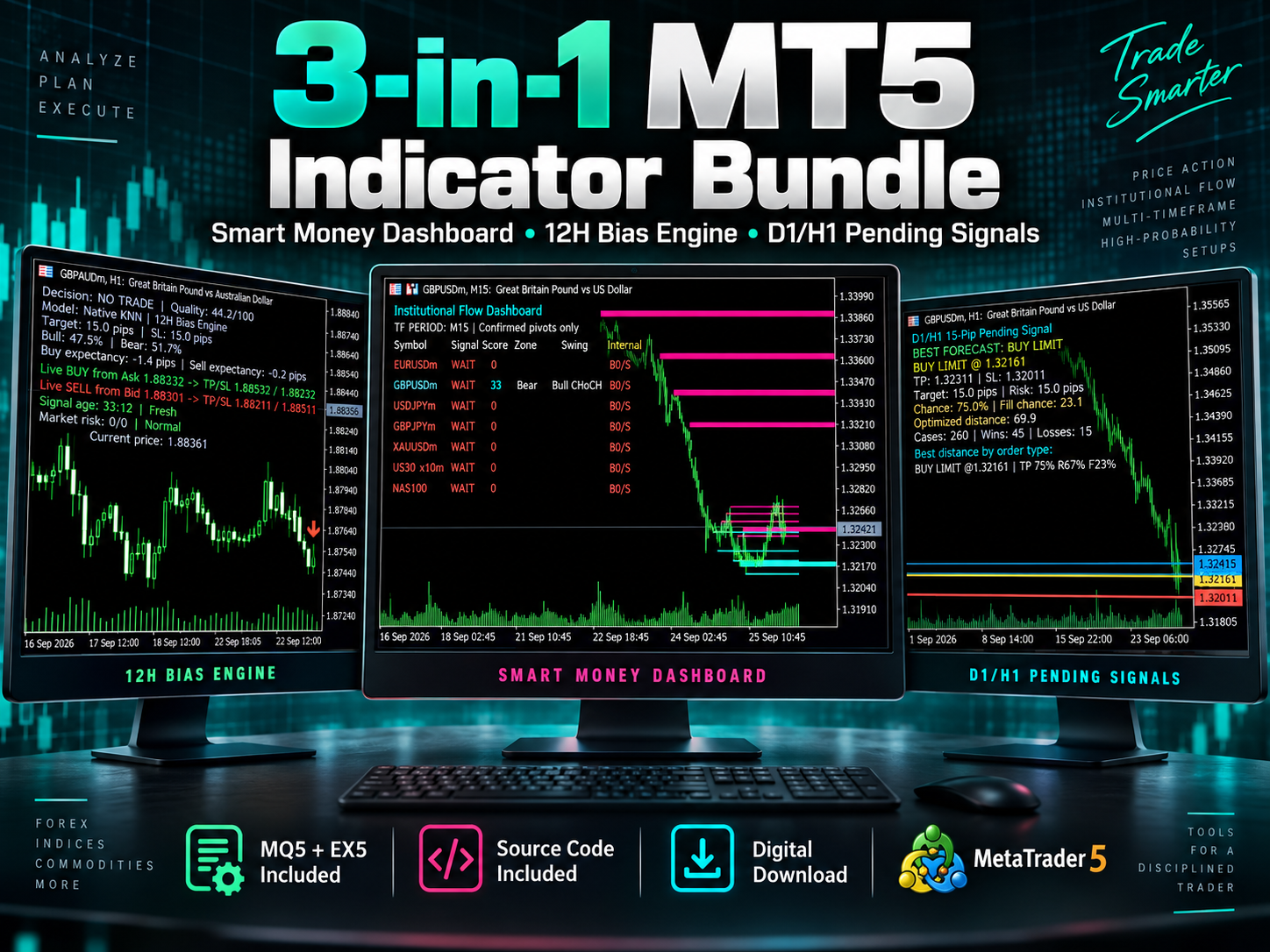
3-in-1 MT5 Indicator Bundle
12H Bias Engine, Smart Money Institutional Flow Dashboard and D1/H1 pending-signal logic with MQ5 + EX5 source included via Etsy.
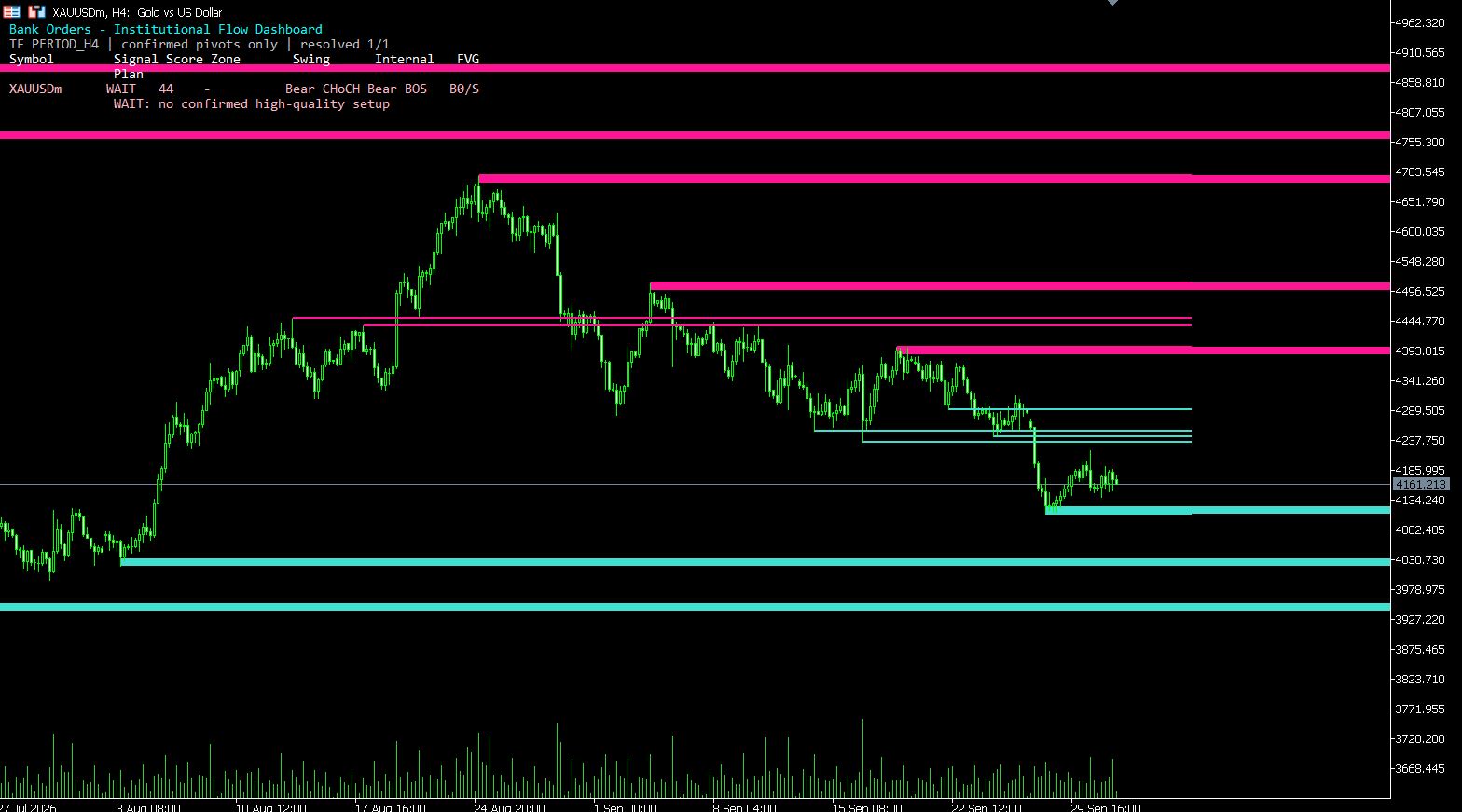
MT5 Bank Orders Institutional Flow Dashboard
Supply/demand zones, BOS/CHoCH, liquidity levels, FVG, equal highs/lows and confirmed trade-plan logic explained with EX5 download.
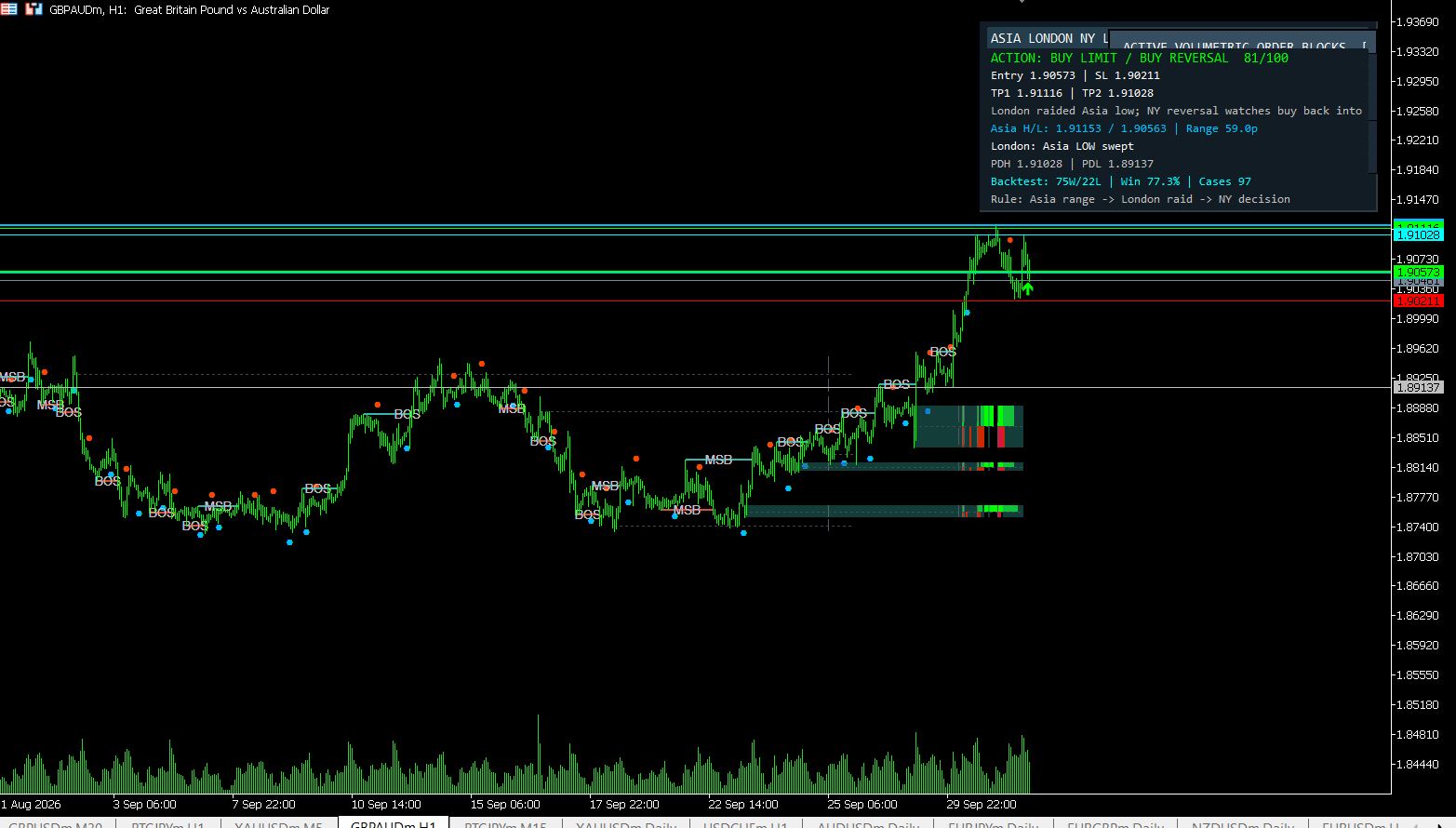
MT5 Asia London NY Liquidity Engine
Asia range, London raid and New York continuation/reversal planning with internal session backtest stats and entry/SL/TP dashboard.
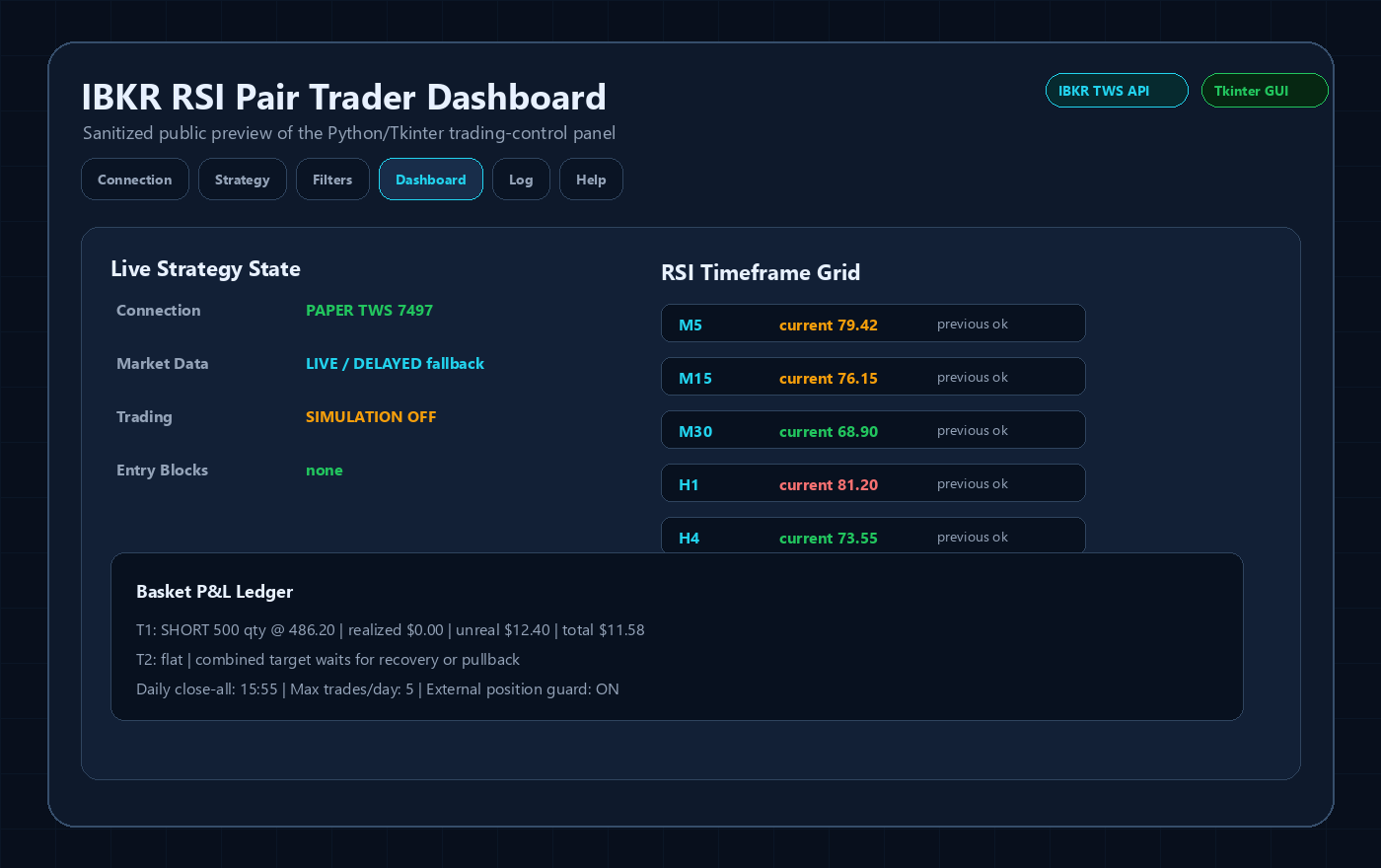
Interactive Brokers RSI Pair Trader
Tkinter desktop trading workflow, TWS API connection handling, RSI pair logic, risk controls and custom IBKR development positioning.
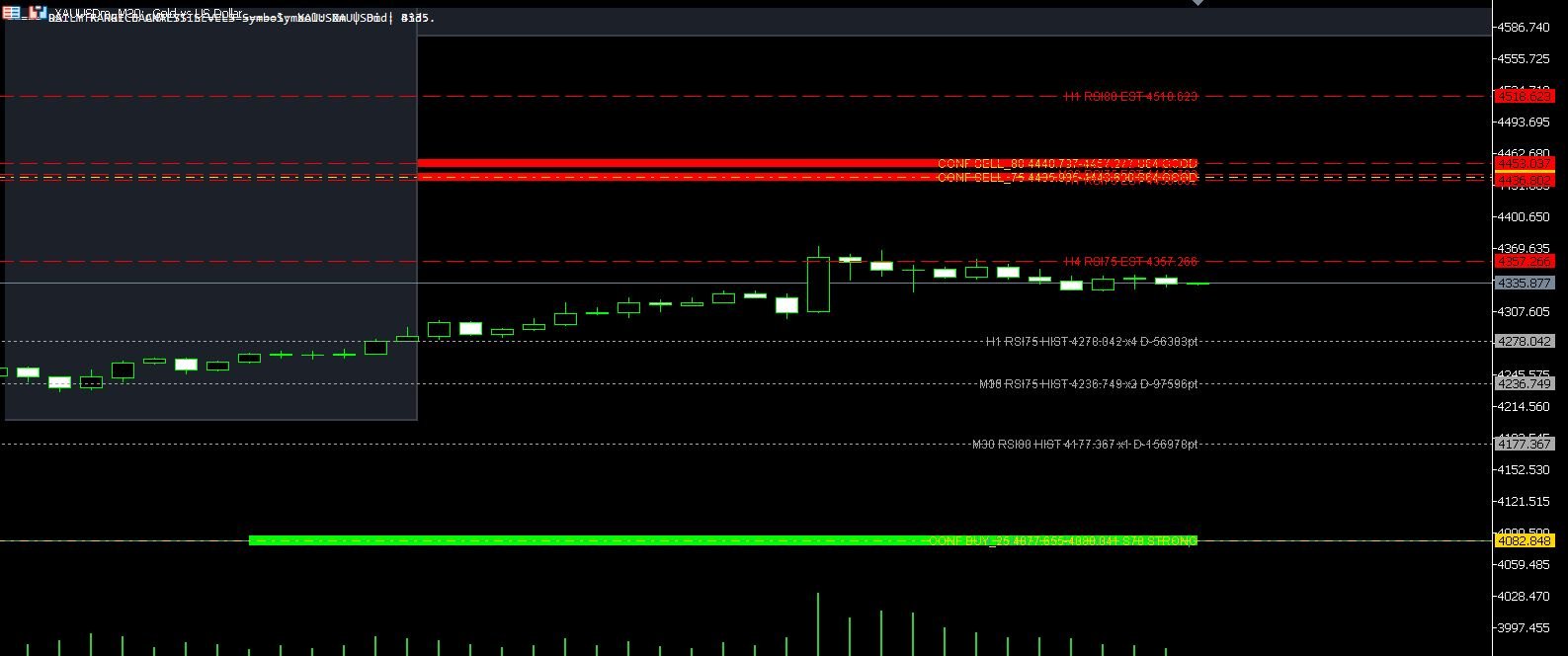
XAUUSD M30 CSV Data For Backtesting
Use clean MT5 historical data for Python backtests, strategy validation, spread checks and realistic gold EA research workflows.