Forex Trading Guidelines › Getting Started
How to Start Forex Trading for Beginners: 12 Steps in Order
Step 1 — Learn the 5 Core Concepts (One Weekend)
- Pip & pip value: the unit of price movement and its dollar value (see the 0.01 lot guide).
- Spread & costs: the difference between bid/ask; every trade starts at a small loss.
- Lot sizes: micro (0.01), mini (0.10), standard (1.00).
- Leverage & margin: how much position your equity controls (leverage guide).
- Bid/ask, long/short, stop/target: order mechanics.
Step 2 — Pick ONE Pair and ONE Timeframe
Beginners who trade five pairs on four timeframes learn nothing five times slower. Choose EURUSD (tightest spreads, most liquid) on a daily trend with M15 entries — the session guide explains why. One pair for at least 100 trades; add pairs only after your journal proves you understand the first one.
Step 3 — Open a Size-Matched Demo (Not $100,000)
Set the demo to your planned live deposit and leverage (Guideline 10: demo rules). A $500 demo for a $500 live account. Trade it exactly like real money: same checklist, same caps, same journal.
Step 4 — Write Your 9-Part Strategy Before Trading
Use the 9-part framework: market, timeframe, context, setup, trigger, stop, target, risk, no-trade conditions. If you cannot write it, you cannot test it — and you will not know if you have an edge.
Steps 5-8 — The Demo Grind (2-6 Months)
| Step | What | Tool |
|---|---|---|
| 5 | Risk 1% per trade, stop on every trade | Rulebook Generator |
| 6 | Run the checklist before every trade | Pre-Trade Checklist |
| 7 | Journal every trade in R | Trading Journal |
| 8 | Track rule breaks honestly | Rule-Break Tracker |
Step 9 — Pass the Demo-to-Live Gate
Before depositing: 100+ journaled demo trades, positive expectancy, 9-part strategy written, covered 2+ market regimes, rule-break rate under 5%. Full checklist on the demo rules page.
Steps 10-12 — Small Live, Micro Lots, Verify the Broker
- Fund only what you can lose. Not savings, not borrowed — rental money (Guideline 1).
- Verify the broker first: regulated, listed on the register, segregated funds, withdrawal test in month one (checklist).
- Trade micro lots at 1% and scale only on journal proof (scaling rules).
The 3 Beginner Mistakes That End Accounts (Before Step 3)
- Funding live before demo proof. The most expensive mistake in forex — the 90% statistic is built on it.
- Learning from "signals" and copy traders. You learn the product's language, not its behaviour. Signals teach nothing because there is no journal, no plan, no process.
- Oversizing "because it's only $500." A $500 account at 1.00 lot is 100:1 notional exposure — one normal move from zero. Size by risk %, always.
Start in the Right Order
FAQ
How much money do I need to start forex trading?
Start with $100-500 that you can afford to lose completely. With micro lots (0.01) and 1% risk, $500 supports real trading with survivable losses. The amount matters less than the process: demo proof first.
How long does it take to learn forex trading?
Basics: 1-2 weeks. A tested strategy with a journal: 3-6 months of demo. Profitability: usually 1-3 years for those who survive the learning phase. The 90% who quit early never finish the demo grind.
Can I learn forex trading on my own?
Yes — everything required is public: the guidelines on this site, free demo accounts, and your own journal. The bottleneck is never information; it is enforcing the rules consistently for 100+ trades.
What is the fastest way to learn forex?
There is no fast way that works: the fast ways (signals, high leverage, paid "gurus") all skip the journal proof that profitability requires. The fastest working path is the 12 steps above, compressed by trading more frequently on demo — not by risking more.
Choose the next useful step
Most visitors arrive with one question: build, test, price, or trust. These shortcuts keep the path practical.
Go deeper before you build, download or automate
Hand-picked engineering articles, indicator breakdowns and trading-system tools so visitors keep exploring instead of leaving after one page.
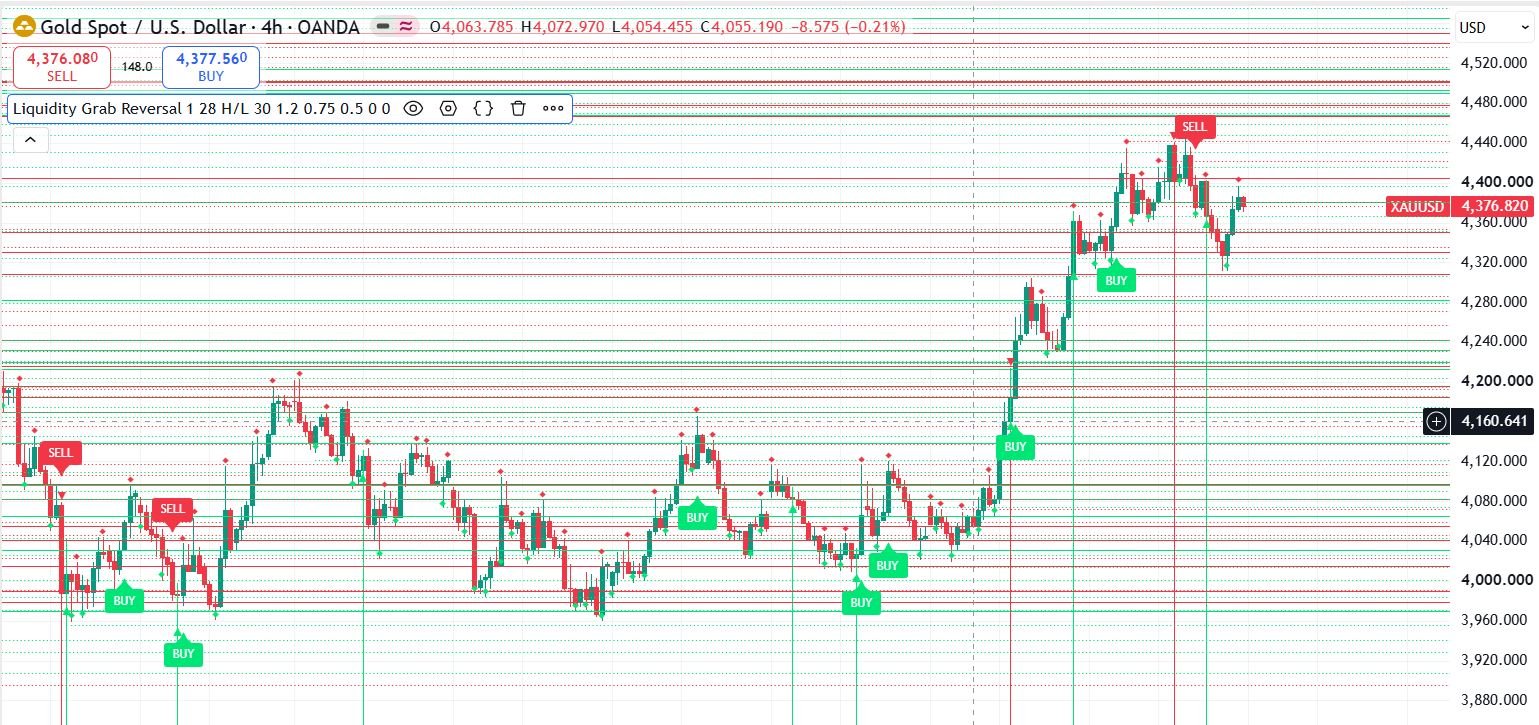
Pine Script to MT4/MT5 Conversion Planner
Analyze Pine strategies, repainting risk, TradingView alert bridges, MTF synchronization and the correct MQL4/MQL5 build path before paying for conversion.
Open planner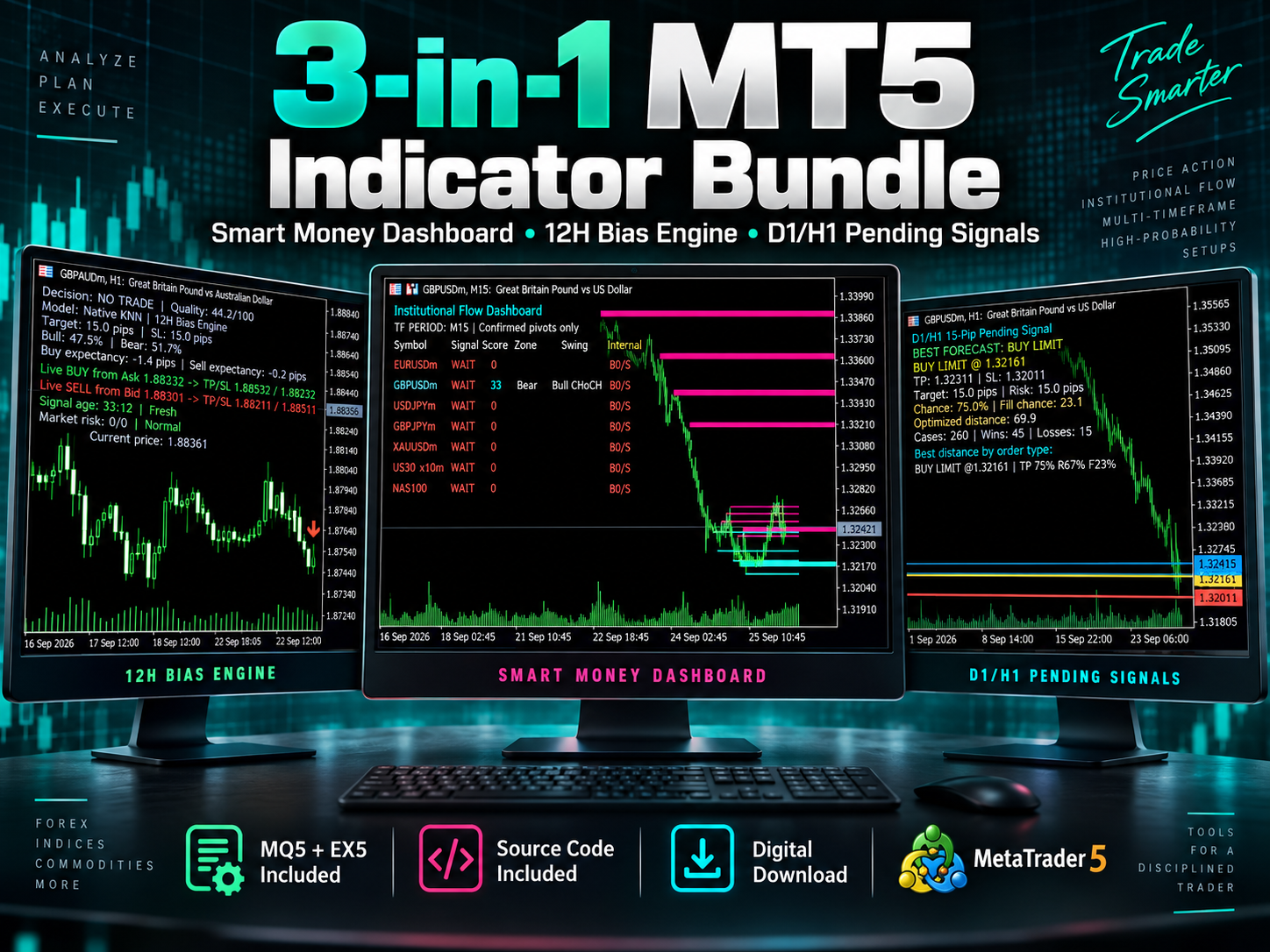
3-in-1 MT5 Indicator Bundle
12H Bias Engine, Smart Money Institutional Flow Dashboard and D1/H1 pending-signal logic with MQ5 + EX5 source included via Etsy.
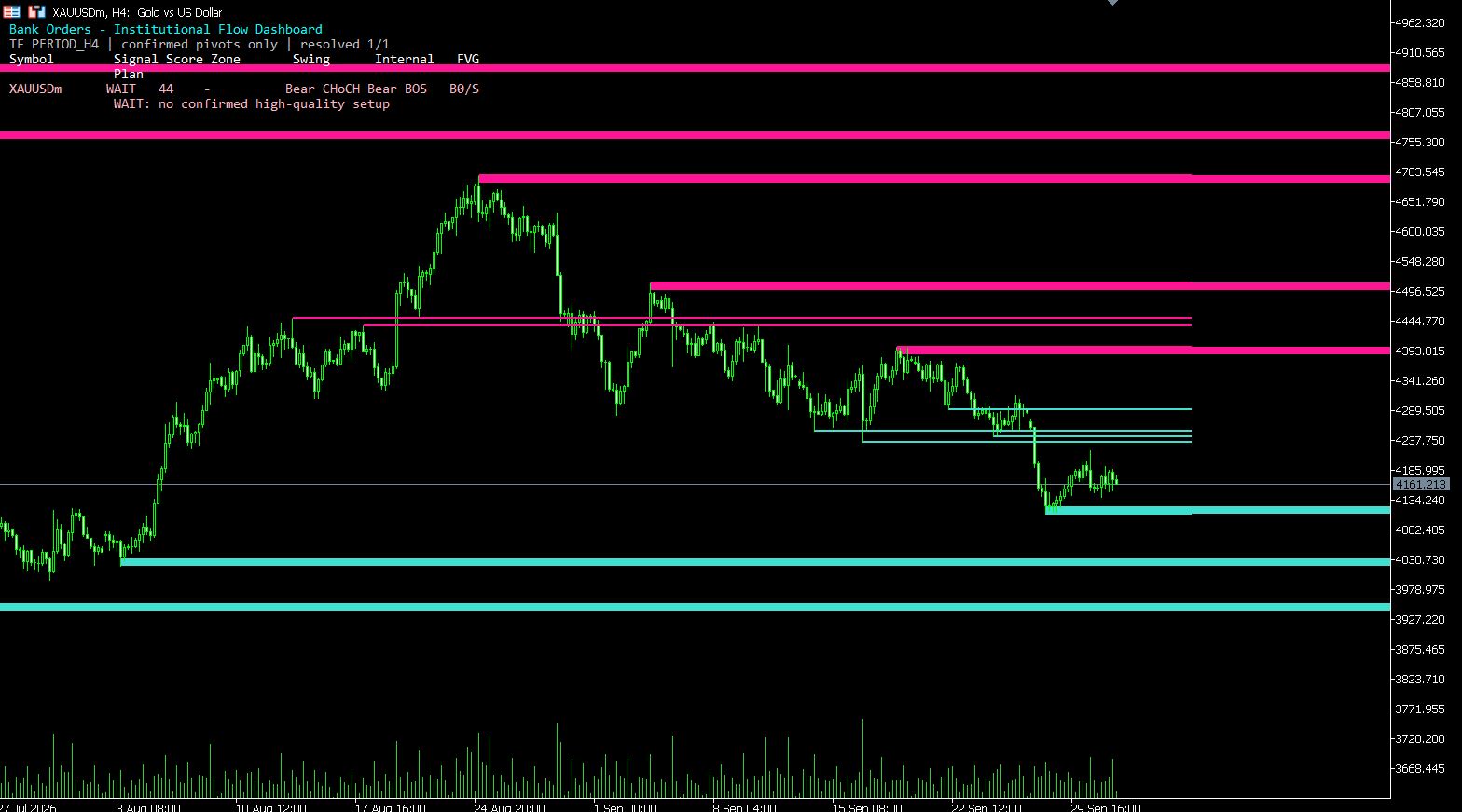
MT5 Bank Orders Institutional Flow Dashboard
Supply/demand zones, BOS/CHoCH, liquidity levels, FVG, equal highs/lows and confirmed trade-plan logic explained with EX5 download.
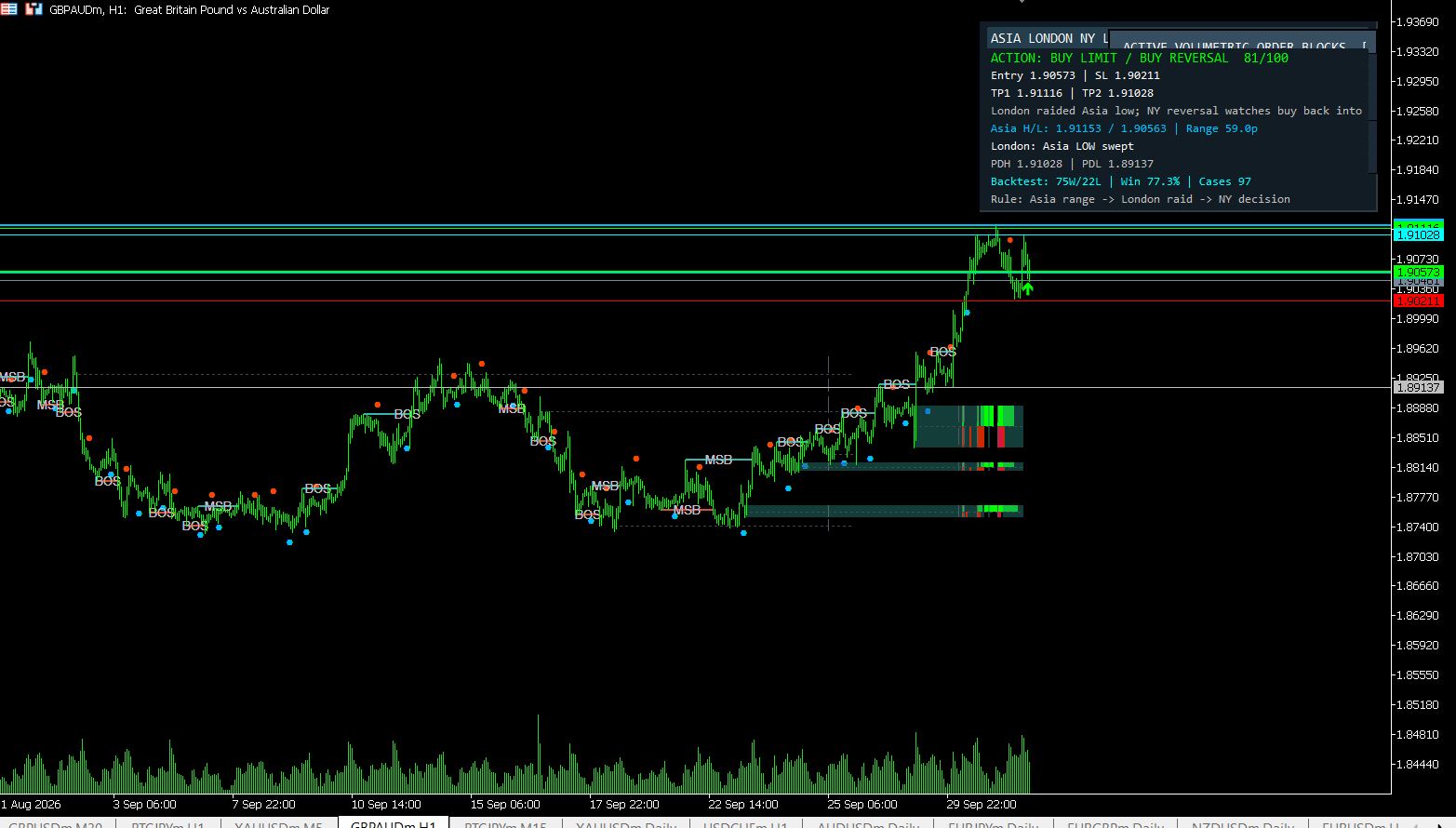
MT5 Asia London NY Liquidity Engine
Asia range, London raid and New York continuation/reversal planning with internal session backtest stats and entry/SL/TP dashboard.
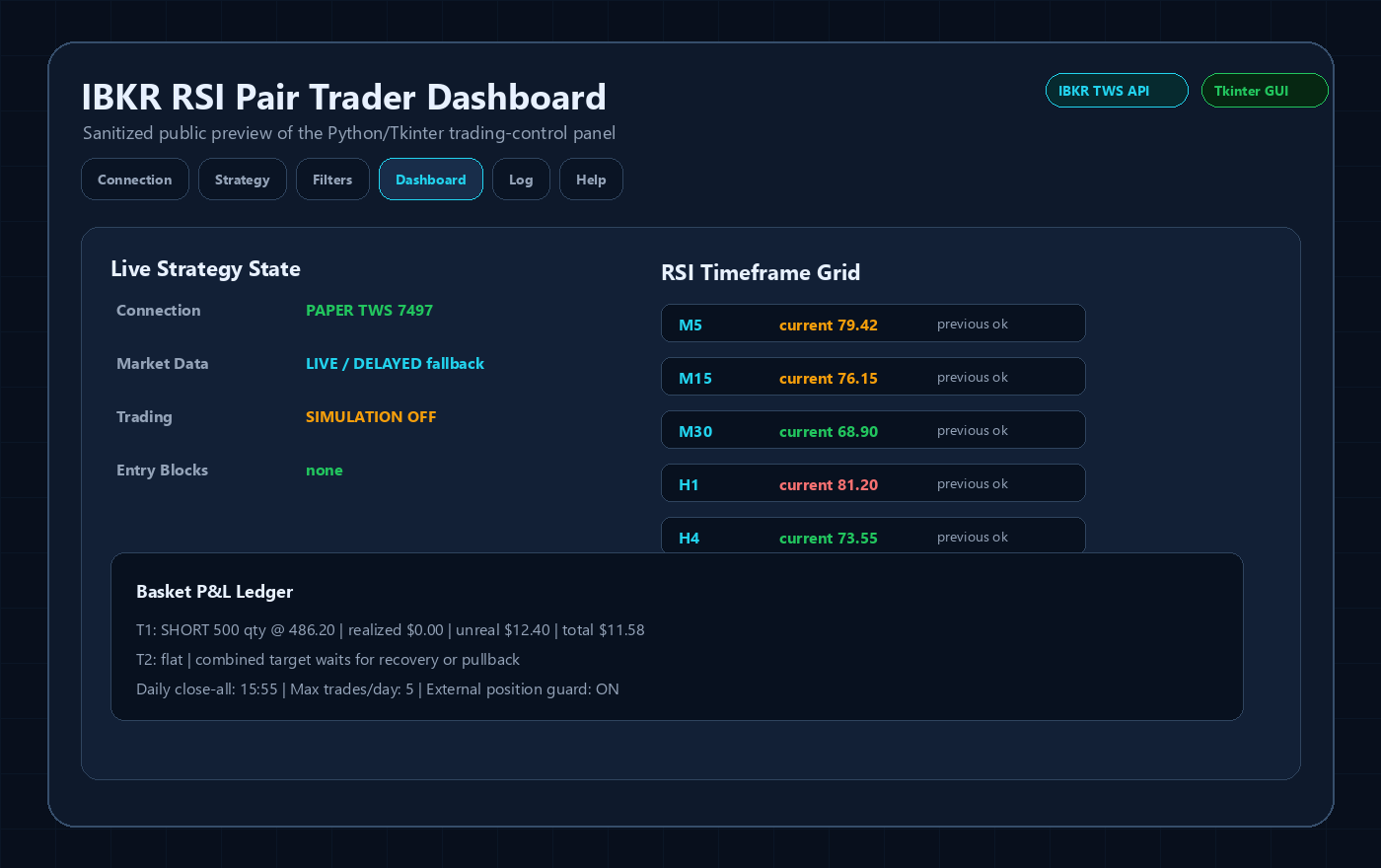
Interactive Brokers RSI Pair Trader
Tkinter desktop trading workflow, TWS API connection handling, RSI pair logic, risk controls and custom IBKR development positioning.
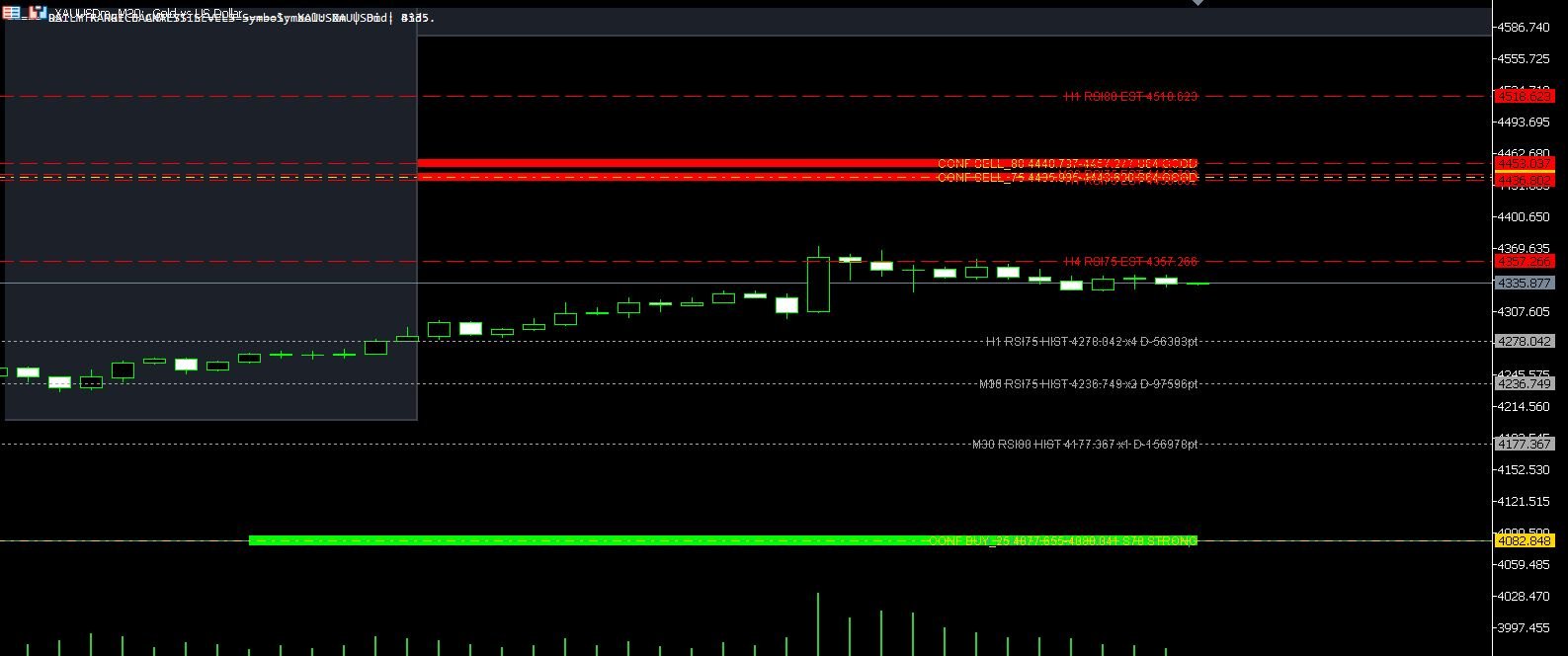
XAUUSD M30 CSV Data For Backtesting
Use clean MT5 historical data for Python backtests, strategy validation, spread checks and realistic gold EA research workflows.