Free MT5 RSI Research Indicator
RSI Momentum-Crash Detector for MT5
A stress detector for the moment when panic may be closer to exhaustion than continuation.
Compiled file only. Install in MQL5/Indicators. Source code is not included.
What It Solves
Spotting historically comparable stressed states where rebound probability and lift rise above baseline.
This is useful for gold and index traders because the worst RSI readings often happen near the most emotional candles. It does not call bottoms blindly; it compares current stress with prior stress.
Technical Method
The indicator defines stressed states using market RSI, realized volatility, and rolling drawdown percentile. It then estimates the historical probability of a sharp volatility-scaled rebound after comparable states.
How This Indicator Works In Practice
Momentum-Crash Detector is not a normal RSI oversold indicator. It models stress using RSI, volatility percentile, drawdown percentile, and current drawdown, then estimates whether similar stressed states historically produced a sharp rebound.
The key outputs are crash probability, baseline rebound probability, probability lift, expected return, t-stat, matched samples, and neighborhood expansion. When probability lift is high but sample count is weak, a trader should be careful. When lift, samples, volatility stress, and drawdown stress all align, the setup deserves attention.
Input Parameters Explained
| Input | Default | Meaning | Tuning Guidance |
|---|---|---|---|
InpMarketSymbol |
empty | Market symbol used for stress analysis; empty means chart symbol. | Use chart symbol for single-market trading. Use a benchmark symbol for cross-market stress. |
InpMarketTimeframe |
PERIOD_CURRENT | Timeframe used for the market stress source. | Keep current unless you want higher-timeframe stress context. |
InpRequireExactAlignment |
true | Requires exact bar-time alignment between chart and source. | True is cleaner. False can help with imperfect broker history. |
InpRSIPeriod |
14 | RSI period for stress state. | Shorter catches stress early, longer smooths false alarms. |
InpVolatilityPeriod |
20 | RMS log-return volatility period. | 10-20 intraday, 30-50 swing. |
InpDrawdownLookback |
63 | Rolling peak-to-current drawdown window. | 20-30 for intraday, 63 balanced, 100+ swing. |
InpVolRankLookback |
252 | Prior observations for volatility percentile. | Use 252 default; shorten only for fast adaptation. |
InpDrawdownRankLookback |
252 | Prior observations for drawdown percentile. | Keep aligned with volatility rank lookback. |
InpMinRankSamples |
60 | Minimum samples required before percentile ranks are trusted. | Raise for conservative research. |
InpForwardHorizon |
5 | Bars used to label future rebound. | 3-5 intraday, 8-20 swing. |
InpTrainingLookback |
3000 | Matured historical states used to estimate rebound probability. | More history improves stress-state reliability. |
InpReboundSigma |
1.25 | Defines sharp rebound as sigma times volatility times square root of horizon. | 1.0 finds more rebounds, 1.25 balanced, 1.5 stricter. |
InpMinMatchedSamples |
40 | Minimum comparable states required. | Raise for confidence, lower for sparse markets. |
InpPriorStrength |
25.0 | Shrinks conditional probability toward baseline. | Higher is conservative; lower reacts more strongly. |
InpRSIBandwidth |
7.5 | Similar RSI tolerance in points. | 5 strict, 7.5 balanced, 10-12 more samples. |
InpVolBandwidthPct |
15.0 | Similar volatility percentile tolerance. | 10 strict, 15 balanced, 25 broad. |
InpDrawdownBandwidthPct |
15.0 | Similar drawdown percentile tolerance. | Widen for rare crash states. |
InpMaxBandwidthMultiplier |
3.0 | Maximum adaptive widening multiplier. | Lower for precision, higher to avoid empty samples. |
InpBandwidthStep |
0.5 | Step used when widening the neighborhood. | Smaller steps are slower but smoother. |
InpMinCrashProbabilityPct |
25.0 | Minimum rebound probability required for signal. | 30-40 for conservative traders. |
InpMinProbabilityLift |
1.50 | Conditional probability divided by baseline probability. | 2.0+ is more selective. |
InpMaxRSIForSignal |
45.0 | Market must remain below this RSI for stress signals. | 35 strict, 45 default, 50 permissive. |
InpMinVolPercentile |
60.0 | Minimum volatility percentile required. | 70+ focuses on true high-volatility stress. |
InpMinDrawdownPercentile |
60.0 | Minimum drawdown percentile required. | 70+ focuses on deeper drawdown regimes. |
InpMinExpectedReturnBps |
0.0 | Minimum rebound expectancy filter. | Set above 0 to require positive average outcome. |
Parameter Ideas By Trader Type
Aggressive Rebound Hunter
Looks for earlier stress-rebound candidates.
Suggested direction: Probability 25%, lift 1.5, RSI max 45, vol/drawdown percentile 60.
Conservative Crash Filter
Waits for stronger historical evidence before acting.
Suggested direction: Probability 35-40%, lift 2.0, min samples 60+, vol/drawdown percentile 70+.
Swing Stress Model
Uses slower stress windows for H4-D1 charts.
Suggested direction: Drawdown lookback 100+, forward horizon 10-20, training 3000+, rebound sigma 1.25-1.5.
These are research starting points, not guaranteed profitable presets. Test each symbol and timeframe with realistic spread, commission, slippage, and session filters before using any RSI signal in live trading.
Where It Fits In The RSI Stack
This indicator is part of the AlgoSpecial RSI Research Cluster: six MT5 indicators designed to answer the questions a fixed RSI line cannot answer alone. The cluster covers percentile tails, volatility-conditioned thresholds, two-dimensional expectancy, oversold continuation risk, stressed-market rebound probability, and Hidden-Markov regime probabilities.
FAQ
Is this a buy and sell signal indicator?
It can plot arrows, but it is best treated as a research-grade RSI decision layer. Confirm entries with market structure, spread, session, volatility, and risk rules.
Does the free download include source code?
No. The free download is the compiled MT5 .ex5 file only. This keeps the proprietary research logic protected while still letting traders test the indicator.
Can I use it on XAUUSD, forex, crypto, or indices?
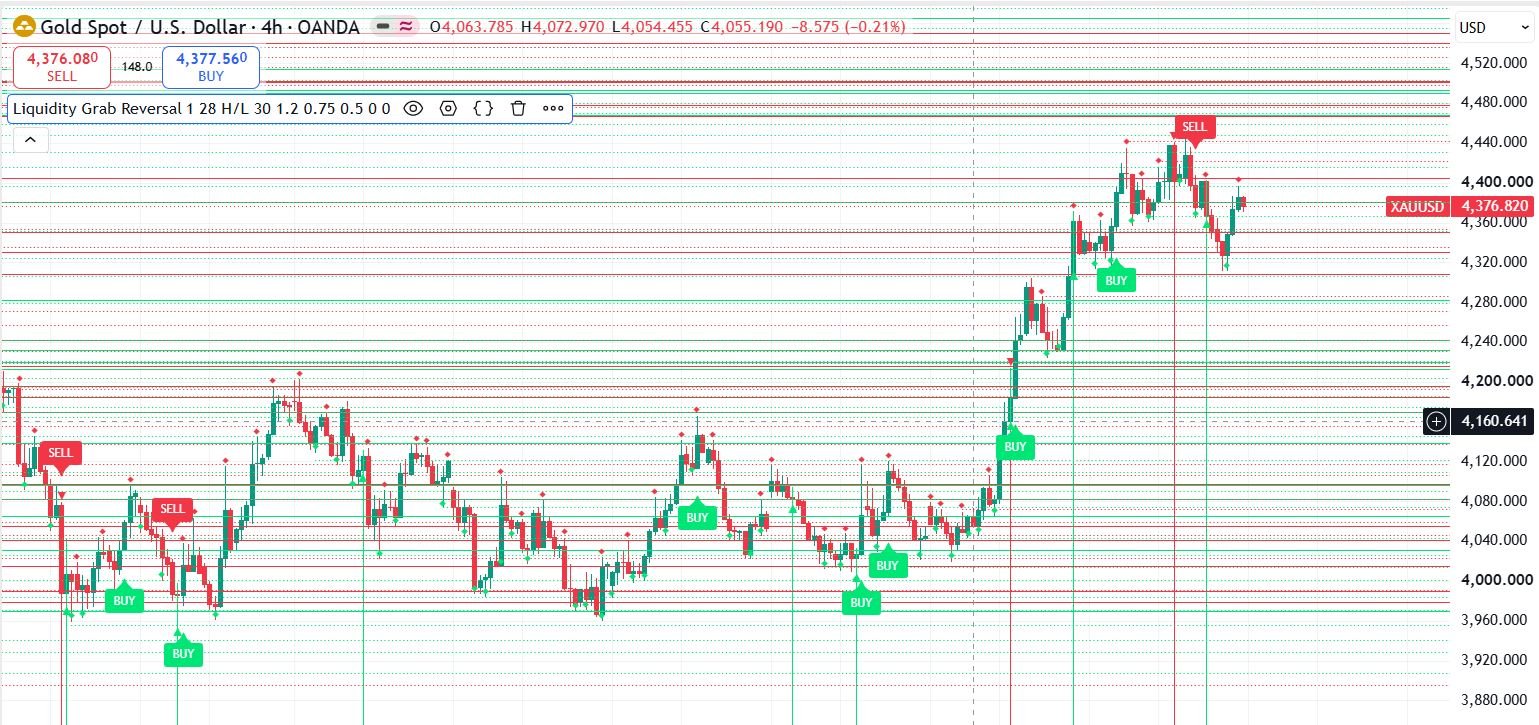
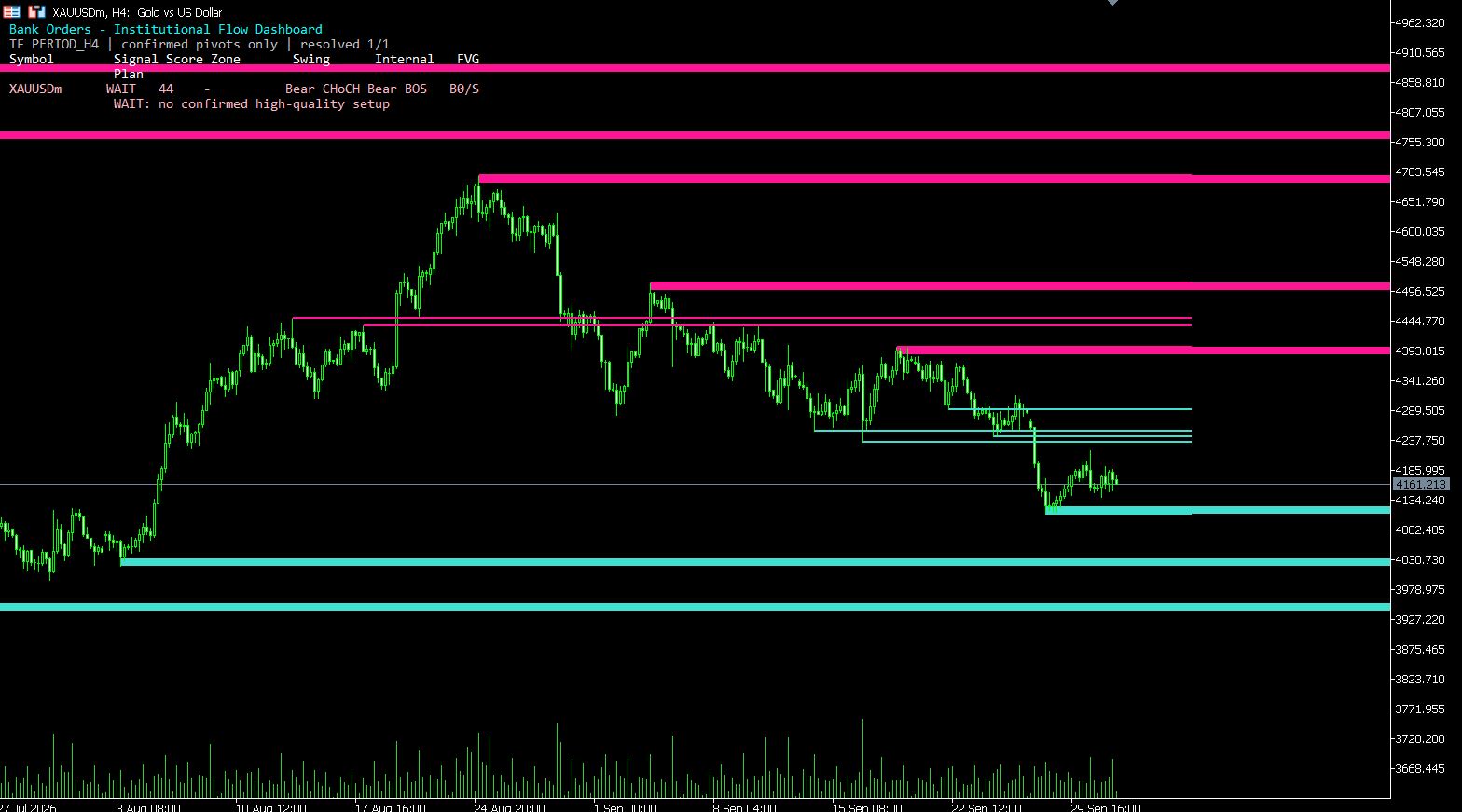
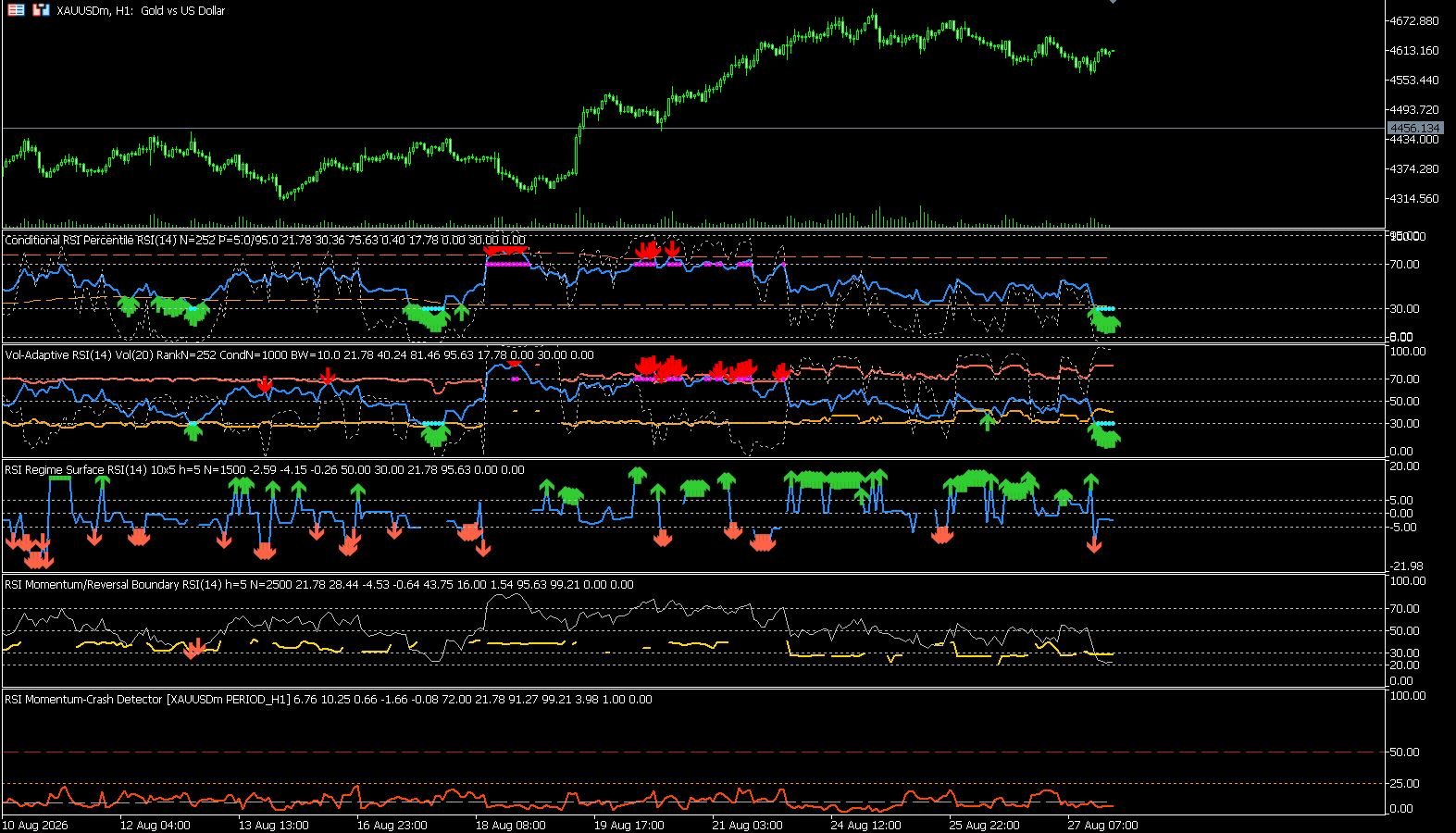
Yes, it is symbol based and can be attached to MT5 charts. The included chart image uses XAUUSD H1 because gold exposes RSI regime changes very clearly, but the logic is not limited to gold.